Wednesday, 17 February 2010

Food: More Fish@Hong Kong Wet Market

I hope the entry Fish: Groupers@Hong Kong Wet Market helped those of you who are interested in learning grouper names.

I find it funny that my students are interested in knowing fish names all of a sudden, and I found it even funnier because their interest originates from a TV commercial of EPS with Jan Lamb and his look-alike who came from a band called "Rubberband".


Now what is there to do with fish names? If you know this musician, you will know his name in Cantonese.

The fish concerned is a very common fish in Hong Kong waters, found anywhere near pier and rocks and it feeds on meat and algae, and its name -- White-spotted Spinefoot.


Image from blogger

Being top on my dad's favourite fish list, this fish belongs to the category of rabbitfish or spinefoot. The fish can grow as big as 40cm and has a rabbit-like mouth, large dark eyes and a shy temperament. They have poisonous spines to defend themselves against threat. Though the poison is not life-threatening to human, it can cause severe pain.[1] (I have suffered from this in the past) The texture of the meat of this fish is smooth yet firm, and in my dad's and my opinions, it tastes better than many other expensive fish when steamed. In Hong Kong, they can be both farm fish or wild catch.[2]


Second on my dad's favourite fish list is ...

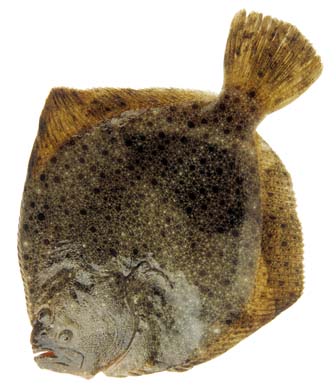
Turbot / Turbo Fish / 多寶魚

Image from guim.co.u

They are highly prized as food fish and they field 4 fillets with the meatier topside portions.[3]


Third on my dad's favourite fish list is ...


Image from blogspot
There are many types of soles and I don't really know which one does my dad like to eat, but he definitely has a taste for flatfishes.


Well, if we don't want to talk about costly fishes here, how about some middle-priced ones?


Image from reef.crc.org.au   
A fish very popular in Thai cuisine, the Barramundi has white, flaky flesh which is particularly smooth when steamed. There are both freshwater and saltwater ones.[4] In Hong Kong, they are often found as farm fish.


Image from redsea.dive.ru


My dad is a real fish lover and he must eat fish every meal. When my dad is home for dinner, he would always ask for this fish. He said it is affordable and the quality is not bad. Well, I don't find many differences between this fish and the Barramundi, except that this one tastes more like freshwater fish.


If my dad doesn't get the Russell's Snapper, he will settle for the Mangrove Red Snapper. Is there any diff?


Image from  wwfsassi.co.za
So much about my dad's choices, I am a natural soup lover! I love all kinds of soup, but if I can choose, fish soup always comes first. Topping my list of favourite fish for soup is the ...


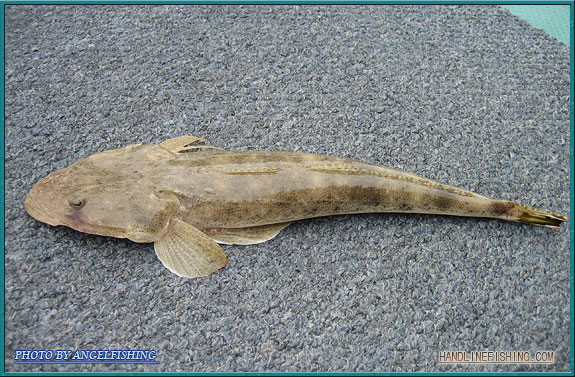
Image from Hand Line Fishing
It has two short spikes on either side of the head that contain venom (poison) which is not fatal but can cause pain and infection. Terribly sweet and milky soup! Wide catch.


Second goes to...

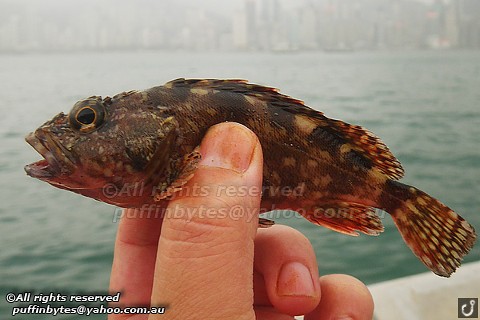
Rockfish / 石狗公

Image from Flickr


Wild catch for sure, lots of bones, tiny and dangerous. One disadvantage, need a lot of them to make a pot of soup. Be careful of the bones when you drink.


In the third place, I have the ...

Small Snakehead / San Pan / 生斑 / (Channa asiatica)
Snakehead / Snake Head Fish / 生魚 / (Channa maculata)


Image from siamfishing
Two types of fish and one big concern -- as National Geographic puts it, "Fishzilla". They produce fast and in huge amount, say 150,000 eggs in 2 years? They are invasive and they cause ecological damage. This fish has already been banned from the USA! Can you imagine that?

Enjoy the fish!
_________________________________________________________________

Vocabulary:
look-alike -- someone or something that is similar in appearance to someone or something else
flaky -- coming off easily in small, flat, thin pieces
Fishzilla -- from the word "Godzilla", a Japanese fictional giant monster. Hereby metaphorically, a monster fish.
fatal -- causes death
invasive -- moving into all areas of something and difficult to stop

_________________________________________________________________

Resources:
http://lockyep.blogspot.com/2009/08/food-groupershong-kong-wet-market.html
http://www1.parknshop.com/WebShop/FishList.do?service=direct&service=1&service=fishListEnu.$DirectLink$4&sp=l12381&sp=SIce-bed+Fish
http://en.wikipedia.org/wiki/Flathead_(fish)
http://www.youtube.com/watch?v=PF2vOp9_hbc

Friday, 12 February 2010

Economics: Anatomy of a Euromess

Hi there! I just read an extremely simple yet informative article on the trouble in Europe right now, and I just can't wait to share with all of you!

For those of you who are interested in economics, let's welcome Dr. Paul Krugman! (Please do search "Krugman" in the Sand Play Area for more entries about him)


(As usual, I hope Dr. Krugman won't mind my quoting of his entire blog entry. Permission not gained for quoting.)


___________________________________________________________________

February 9, 2010, 11:52 AM


Anatomy of a Euromess

Most press coverage of the eurozone troubles has focused on Greece, which is understandable: Greece is up against the wall to a greater extent than anyone else. But the Greek economy is also very small; in economic terms the heart of the crisis is in Spain, which is much bigger. And as I’ve tried to point out in a number of posts, Spain’s troubles are not, despite what you may have read, the result of fiscal irresponsibility. Instead, they reflect “asymmetric shocks” within the eurozone, which were always known to be a problem, but have turned out to be an even worse problem than the euroskeptics feared.

So I thought it might be useful to lay out, in a handful of pictures, how Spain got into its current state. (All of the data come from the IMF World Economic Outlook Database). There’s a kind of classic simplicity about the story — it’s almost like a textbook example. Unfortunately, millions of people are suffering the consequences.

The story begins with the Spanish real estate bubble. In Spain, as in many countries including our own, real estate prices soared after 2000. This brought massive inflows of capital; within Europe, Germany moved into huge current account surplus while Spain and other peripheral countries moved into huge deficit:

DESCRIPTIONIMF

These big capital inflows produced a classic transfer problem: they raised demand for Spanish goods and services, leading to substantially higher inflation in Spain than in Germany and other surplus countries. Here’s a comparison of GDP deflators (remember, both countries are on the euro, so the divergence reflects a rise in Spain’s relative prices):

DESCRIPTIONIMF

But then the bubble burst, leaving Spain with much reduced domestic demand — and highly uncompetitive within the euro area thanks to the rise in its prices and labor costs. If Spain had had its own currency, that currency might have appreciated during the real estate boom, then depreciated when the boom was over. Since it didn’t and doesn’t, however, Spain now seems doomed to suffer years of grinding deflation and high unemployment.

Where are budget deficits in all this? Spain’s budget situation looked very good during the boom years. It is running huge deficits now, but that’s a consequence, not a cause, of the crisis: revenue has plunged, and the government has spent some money trying to alleviate unemployment. Here’s the picture:

DESCRIPTIONIMF

So, whose fault is all this? Nobody’s, in one sense. In another sense, Europe’s policy elite bears the responsibility: it pushed hard for the single currency, brushing off warnings that exactly this sort of thing might happen (although, as I said, even euroskeptics never imagined it would be this bad).

Am I calling, then, for breakup of the euro. No: the costs of undoing the thing would be immense and hugely disruptive. I think Europe is now stuck with this creation, and needs to move as quickly as possible toward the kind of fiscal and labor market integration that would make it more workable.

But oh, what a mess.


______________________________________________

Vocabulary:
peripheral -- happening at the edge of something; neighbouring; namely other members of PIIGS -- Portugal, Italy, Ireland and Greece

______________________________________________


Resources:

Wednesday, 10 February 2010

Food: Festive Puddings

Now, Chinese New Year is just around the corner, and so you should know the names of the festive puddings in English. Some of you have already learnt them from me in the lessons. It is the others turn now.


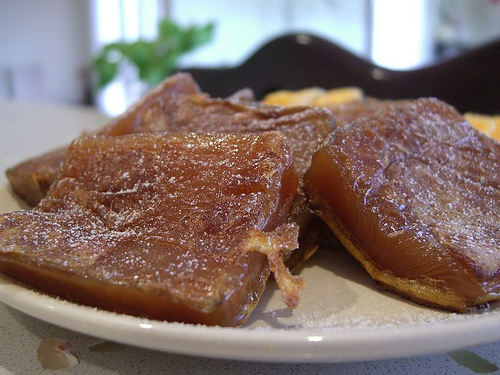
The Cantonese style is made from glutinous rice (remember my Thai Mango article?) and brown sugar while the Shanghai style is made from white sugar.

Image from wikimedia
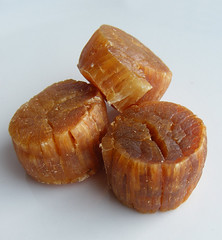
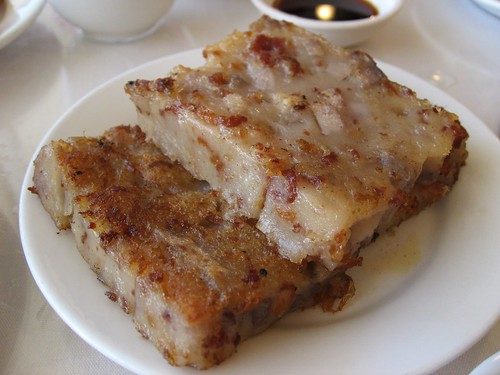
Remember this, the orange colour root is called carrot, the white one is called turnip. Turnip cake is made from plain rice flour and sun-dried shimps. Nowadays, some companies even added conpoy or dried scallops.


Conpoy
Image from flickr
Made from the corm of taro.

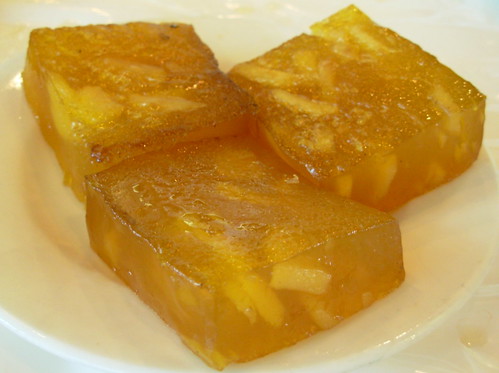
My favourite!!! Made from the corm of water chestnut plant. These days, the new versions also come with a very sweet smelly flower called Osmanthus. The type used in tea and puddings is called Osmanthus fragrans or Sweet Osmanthus.
Image from flickr
Osmanthus
Image from 
blogspot
Don't eat too much guys!!!! It is really easy to get bad stomach these days!!

Resources:
http://en.wikipedia.org/wiki/Year_cake


Monday, 8 February 2010

Learning Method: Grammar First or Vocabulary First?

I really like to read comments from you guys as I will get to know your thinking and feelings towards learning. Your comments offer me the chance to give you more guidance and suggestions, and at the same time, allow me to understand more, so please let me know your troubles in learning, don't keep them to yourselves.

This entry is a response to Phy's comment on the entry Learning Method & Psychology: Why Can't I Speak Fluent English?

A recap of what she said,
"Agree Locky's suggestions
I do think that grammar is more important than other elements. At least I can express my basic meaning of a sentence even though I use a limited vocabularies. Once you build up confidence, you hope to varify your vocabularies.
Sometimes I have chance in speaking English in daily counter duty. I'll memorize some frequently used keywords and sentences. It may be a helpful method to handle daily requests. After the transaction, I usually think the whole conversation again what should I say/ how to express better next time."


In my opinions, sometimes, you do need to memorise expressions related to your work so that you get immediate improvement in your English, like in Phy's case. This is an area of study in English called ESP, English for Specific Purposes. In the long run, however, it is important to build a firm foundation. For me, grammar and vocabulary are both equally important, and I believe they can both be trained at the same time, which is why I started this blog.

But then again, some learners will put more emphasis in grammar, others might opt for vocabulary, everybody's different. The key here is to understand what type of learner you are -- which one you need to more or which you will be more interested to begin your learning with. Eventually, everyone will arrive at the same point of achievement no matter which route you decide to take.

Say for example, if your work requires you to speak perfect English, almost to a native level because your company is filled with westerners, then I suggest you first spend a little time on finding your errors in your spoken English, then correct them through repeated drillings --the "Hear Yourself" method. Once your grammar is fixed, you can pay more emphasis in vocabulary that is related to your work.

On the other hand, if you are bored to death by grammar, then start with vocabulary first. Get to know more about the world through reading fashion magazines, listening to songs, watching movies, etc., find interests in life and in English first before you go deeper into the grammatical aspects of English.

I believe that there is really no such thing as "the only approach" in learning something, only "the most interesting approach" and "the most relevant approach". My choice is always the former one because if you are keen on something, you will work on it!


Resources:
http://lockyep.blogspot.com/2010/02/learning-method-psychology-why-cant-i.html

http://www.blogger.com/posts.g?blogID=8433985884370686932&searchType=ALL&txtKeywords=&label=World

http://www.blogger.com/posts.g?blogID=8433985884370686932&searchType=ALL&txtKeywords=&label=Reading

http://www.blogger.com/posts.g?blogID=8433985884370686932&searchType=ALL&txtKeywords=&label=Songs

http://www.blogger.com/posts.g?blogID=8433985884370686932&searchType=ALL&txtKeywords=&label=Movies

Friday, 5 February 2010

News: Tycoons set to ride the Golden Tiger

Image: http://www.chinesehoroscope3000.com/horoscope-images/horoscope_2010_tiger-1.jpg

Fengshui masters are all over the news these days. First, I read about the Maoshan master who offered sex in exchange for good fortune (and he got paid for doing that!!!), then I read about the I'm-not-a-feng-shui-master Tony Chan losing the court case.

What I find even more interesting is that a student of mine pointed out that the two cases are actually in line with each other: That is, the two men both offered hope for the other parties that they could change their lives, such as bringing them good fortune or finding long-disappeared love ones, in exchange for something, such as sex or/and cash. And the other parties will do almost anything for even tiny glimpse of hope that might exist!

To tell you the truth, I have never thought of that! And it takes real life experience to be able to see the correlations between the cases! I AM IMPRESSED!!!


Anyway, that's slightly out of the scope of my talking point today. I found an interesting news article while reading the Standard yesterday afternoon:


__________________________________________________________________

Tycoons set to ride the Golden Tiger

DerekYiu and BethYe

Thursday, February 04, 2010

For investors troubled with how the Hang Seng Index stumbled through much of January, a professional report sets the scene for investment choices in the Year of the Golden Tiger - the CLSA Feng Shui Index 2010.

The first sentence of the tongue-in-cheek analysis reads: "Tiger years are typically marked by dramatic changes and even upheaval."

"Tigers are impetuous and unpredictable, so the Hang Seng Index will be more fluctuating this year," said CLSA's Vonnie Chan, senior institutional sales, China and Hong Kong.

Chan said the HSI will start the year well but face a bumpy time in the following three months. It will test lows in May, and June will be a good time to get bargains. August will see another slip before a key upswing in September.

While the Feng Shui Index does not say how the HSI will end the year, managing director of China-Hong Kong strategy Francis Cheung noted the brokerage expects it to reach 26,000.

Chan said "Gold" industries will boom and so will corresponding securities including steel, silver and aluminum. "Wood" industries such as clothing will also fare well. The Feng Shui Index sees gold exceeding US$2,000 an ounce, US$900 (HK$7,020) more than CLSA's actual house view.

2010 is a great year for Dragons, Horses and Goats. Dragons such as Li Ka-shing should focus on the family and career, which will bring them great happiness and success. Horses such as President Hu Jintao have another top year ahead. It will turn out greater if they can rein in impatience and channel that energy. They should trust their instincts - such decisions will prove to be uncannily on the money.

"Uncle Four" Lee Shau-kee, a Rabbit, will pull off more than one stunning stock market coup. And apartments in one of Lee's Henderson Land (0012) projects will beat even the world record HK$71,280 per square foot. Model Chrissie Chau Sau-na also gets a special mention. The Cow girl can "look forward to big breakthroughs in her career and love life by Christmas."

__________________________________________________________________

Vocabulary:
glimpse -- when you see something or someone for a very short time
tongue-in-cheek -- describes something that is meant to be understood as a joke, although it might appear to be serious
upheaval -- (a) great change, especially causing or involving much difficulty, activity or trouble
impetuous -- likely to act on a sudden idea or wish, without considering the results of your actions
bumpy -- not smooth, like a road with many stones and you are driving a car over them.
upswing -- an increase or improvement
boom -- [I] to increase or become successful and produce a lot of money very quickly
uncannily -- strangely or mysteriously; in a way difficult or impossible to explain
pull sth off -- to succeed in doing something difficult or unexpected
coup -- an unexpectedly successful achievement

__________________________________________________________________

Opinions:

What is this CLSA Feng Shui Index thing? I did a bit of research and found that it has been around for a number of years -- the official CLSA website stated that it began in 1992 on the Chinese New Year card for the clients. And last year's sounds rather accurate!!! (How can it not? It will be true no matter what) My question is, how about this year? I have got the original report from the official CLSA website for you to read in details.

The most daring part of this report is the prediction of gold prices, of which is predicted to break US$2000 / ounce! I wonder where the number "2000" comes from...

Believe it or not, it is up to you. Either way, the report has added a bit of fun to the world of economy (and the world of English learning, of course, right?).

Locky's English Playground will still be opened for all English lovers and players during Chinese New Year holidays, so keep following!

__________________________________________________________________

Resources:


Wednesday, 3 February 2010

Vocabulary: Chinese New Year Flowers and Plants

Wondering what flowers to buy for the Chinese New Year? I guess you have much better idea than I do. But do you know the names of these flowers in English? Remember to remind curious at all time and you will learn more!

Here is a list of names which might be useful to you:


Fresh, aqueous and sweet fragrant flower that symbolises prosperity, wealth and good fortune[1,2]. Often sold in pots with water, or simply bulbs. Apply warm water to the bulb and blossoms will bloom.
Image from made-in-china
Flowers of Chinese plum, ume or Japanese apricot. Each flower has five petals with colours ranging from white to rose to deep red. It symbolises luck.[1]
Image from kimhunter.ca

Peach Flowers
The fruit symbolises longevity[4], but the flower symbolises chances of love and good relationships. The flower looks very much like plum blossom, but the stigmas (tip of the style) are smaller than those of plum blossoms and the petals are overlapping each other in this case.
Image from statesymbolsusa.org
Orchid being a common term, Phalaenopsis or simply Phal is the most welcomed type of orchid in the Hong Kong local markets, and of course, in Thailand. They like moist and hate direct sunshine. Most are epiphyte (grow on another tree but non-parasitic), a few are lithophyte (grow in or on rocks).[5]
Image from chesterkiwanis.org

Symbolises prosperity due to its name in Chinese. Fruits can be preserved in salt or sugar and it is commonly believed to be a remedy of sore throat as it helps to fight infections in the throat and dissolve phlegm.[6]
Image from daleysfruit.com.au
Not only are they the symbol of respect to the ancestors, they also have a wide variety of medicinal properties, including anti-HIV-1, antibacterial and antimycotic (antifungal).[7 ] In Chinese medicine, they are also good for the eyes -- "clear the eyes".
Image from ctahr.hawaii.edu

Vocabulary:
bulb -- a round root of some plants from which the plant grows
bloom -- When a flower blooms, it opens or is open, and when a plant or tree blooms it produces flowers
longevity -- living for a long time
epiphyte -- (of plants) grow on another tree but non-parasitic
lithophyte --(of plants) grow in or on rocks
parasitic -- caused by or connected with a parasite, which is an animal or plant that lives on or in another animal or plant of a different type and feeds from it
phlegm -- a thick substance in your nose and throat that is produced especially when you have a cold
antimycotic -- antifungal


Resources: