Wednesday, 24 February 2010
Environment: Earth Hour 2010 (add-ons)
I have been very busy lately and most of my better articles are still pending for more researches, so I guess you guys have to be a little patient.
In my last entry, I said I will support the upcoming Earth Hour event and I suggested that it is important to save electricity. By doing so, we can lower the carbon dioxide emission worldwide in that hour.
But hey, there is only one Earth Hour a year, and there are still (365 days x 24 hours - 1 hour) hours of time at which we are using electricity, so it is actually a very small part of contribution to our beautiful planet, but it is the awareness and the education behind this event that count most in your participation.
If you are aware of the latest news reports, you should have heard of the "natural" disasters happened in other parts of the world. Here I offer you a few news reports:
Portugal rushes aid to Madeira after deadly floods
http://news.bbc.co.uk/2/hi/europe/8526679.stm?ls
Thousands Flee Indonesia Floods
http://news.bbc.co.uk/2/hi/asia-pacific/8527149.stm
El Niño hits 14 Philippines provinces
http://www.mb.com.ph/articles/244883/el-ni-o-hits-14-provinces
Al Gore said in his movie, An Inconvenience Truth, that "The ice has a story to tell", now "Floods and heat waves also have a story to tell".
All these cases happened in less than a week, and let's not forget the Polar Ice Caps are also melting by the second. There have been numerous disputes over how fast the ice caps are melting and how soon the low sea level countries will be flooded; some say faster, some say slower. To me, it never matters how fast or how soon, it is happening! Why waste time on arguing who has the most accurate calculation? Nobody will know for sure until the day all the ice has melted. And by then, who will still care about whose claim is right and whose claim is wrong? There will be no turning back by then and so we shouldn't give ourselves hope that the Earth will only be critically sick many decades later. Treat the entire situation as serious as we all can and do whatever it takes to cure the planet as urgent as possible.
The Earth is already sick and it will die if we don't try to heal her.
Listen to Michael Jackson's Earth Song MTV again to feel the urge if you must.
Vocabulary:
dispute -- an argument or disagreement, especially an official one between, for example, workers and employers or two countries with a common border
Resources:
http://lockyep.blogspot.com/2010/02/environment-earth-hour-2010.html
http://news.bbc.co.uk/2/hi/europe/8526679.stm?ls
http://news.bbc.co.uk/2/hi/asia-pacific/8527149.stm
http://www.mb.com.ph/articles/244883/el-ni-o-hits-14-provinces
http://lockyep.blogspot.com/2009/03/movie-inconvenient-truth.html
http://en.wikipedia.org/wiki/Effects_of_global_warming
http://lockyep.blogspot.com/2009/11/movie-song-this-is-it.html
Message: Please Let Me Know
While you are reading my entries and watching videos which are linked from this blog, if you happen to find any dead links, please let me know, so that I can update them and keep the entries meaningful no matter when you read it.
You can let me know by sending me email or leaving comments.
Thanks a million!
(Thank Timothy for letting me know about the song links I put up. They are fixed now.)
Cheers!
Locky
Monday, 22 February 2010
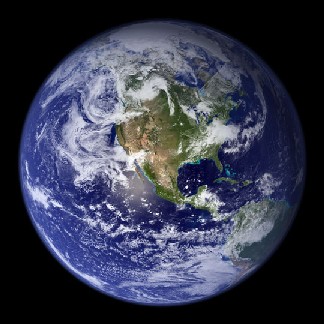
Environment: Earth Hour 2010
Hey guys, it is another big day in man's history for you and me to contribute to this amazing planet. The Earth Hour 2010 will be held at 8:30pm on the 27th March 2010. I joined it last year and supported the event by going out for dinner instead of staying at home, thus blacking out my home entirely for more than an hour.
Did I cheat? Well, not really, because I really didn't switch on the lights. Is it difficult to participate? Not at all! Just leave home with lights out and go out for a walk or do some shopping and you will be supporting the event! You don't always need to be at home, right?
But I have an even better idea!
You could go to the harbour sides and witness this tremendously wonderful event! Imagine you and your love ones arriving at Tsim Sha Tsui 5 minutes before the start and then watching the lights go out when the time strikes 8:30pm!!! Take a look at how clear the stars will be and then think about how much energy we can save in just that hour !!!
It will be truly peaceful, educational and meaningful to be a part of this!!! So please don't forget this day!!!
Do it for the world, do it for you!
Friday, 19 February 2010
Medical: Gastroesophageal Reflux Disease
| Image from itechtalk |
Now, why am I doing that? Guess I am too busy, or maybe all those listed above have become my bad bad habits. You see, I do enjoy eating slow meals at a nice restaurant, but it always turns out that I am grasping for breath when I finish my bite, which means, I didn't even know I was eating too fast!
As a result, what do I get? I get something call acid reflux, or the proper name, Gastroesophageal Reflux Disease (GERD). Basically, it is when the food and juice in the stomach rush back to the oesophagus, and thus the gastric acid "burns" the walls of the oesophaghus and causing inflammation.
My symptoms include heartburn, trouble swallowing (dysphagia) and pain with swallowing (odynophagia).
There could be other symptoms for other people, so you may want to read up on more articles for further details.
There were a few days when I had to take strong medicine to relieve the pain, but eventually, it was the change back to regular lifestyle that helped me recover.
It is so good to be able to eat ~! Have a healthy life!
PS: By the way, I have to watch the amount of coffee I am drinking now. And when I drink, I have to make sure that I eat before I drink, because coffee increases the risk of acid reflux [1].
http://en.wikipedia.org/wiki/Heartburn
http://en.wikipedia.org/wiki/Dysphagia
http://en.wikipedia.org/wiki/Odynophagia
http://lockyep.blogspot.com/2010/01/health-and-fitness-healthy-coffee.html
[1] http://en.wikipedia.org/wiki/Coffee#Health_and_pharmacology
Wednesday, 17 February 2010
Food: More Fish@Hong Kong Wet Market
![]() |
Image from guim.co.u
|
![]() |
| Image from blogspot |
![]() |
| Image from wwfsassi.co.za |
![]() |
| Image from siamfishing |
Friday, 12 February 2010
Economics: Anatomy of a Euromess
Anatomy of a Euromess
Most press coverage of the eurozone troubles has focused on Greece, which is understandable: Greece is up against the wall to a greater extent than anyone else. But the Greek economy is also very small; in economic terms the heart of the crisis is in Spain, which is much bigger. And as I’ve tried to point out in a number of posts, Spain’s troubles are not, despite what you may have read, the result of fiscal irresponsibility. Instead, they reflect “asymmetric shocks” within the eurozone, which were always known to be a problem, but have turned out to be an even worse problem than the euroskeptics feared.
So I thought it might be useful to lay out, in a handful of pictures, how Spain got into its current state. (All of the data come from the IMF World Economic Outlook Database). There’s a kind of classic simplicity about the story — it’s almost like a textbook example. Unfortunately, millions of people are suffering the consequences.
The story begins with the Spanish real estate bubble. In Spain, as in many countries including our own, real estate prices soared after 2000. This brought massive inflows of capital; within Europe, Germany moved into huge current account surplus while Spain and other peripheral countries moved into huge deficit:
These big capital inflows produced a classic transfer problem: they raised demand for Spanish goods and services, leading to substantially higher inflation in Spain than in Germany and other surplus countries. Here’s a comparison of GDP deflators (remember, both countries are on the euro, so the divergence reflects a rise in Spain’s relative prices):
But then the bubble burst, leaving Spain with much reduced domestic demand — and highly uncompetitive within the euro area thanks to the rise in its prices and labor costs. If Spain had had its own currency, that currency might have appreciated during the real estate boom, then depreciated when the boom was over. Since it didn’t and doesn’t, however, Spain now seems doomed to suffer years of grinding deflation and high unemployment.
Where are budget deficits in all this? Spain’s budget situation looked very good during the boom years. It is running huge deficits now, but that’s a consequence, not a cause, of the crisis: revenue has plunged, and the government has spent some money trying to alleviate unemployment. Here’s the picture:
So, whose fault is all this? Nobody’s, in one sense. In another sense, Europe’s policy elite bears the responsibility: it pushed hard for the single currency, brushing off warnings that exactly this sort of thing might happen (although, as I said, even euroskeptics never imagined it would be this bad).
Am I calling, then, for breakup of the euro. No: the costs of undoing the thing would be immense and hugely disruptive. I think Europe is now stuck with this creation, and needs to move as quickly as possible toward the kind of fiscal and labor market integration that would make it more workable.
But oh, what a mess.