Wednesday, 19 May 2010

Business Vocabulary: The Cogs -- The Boss Group


Image from Dreamstime

If reading comics can learn English, do you think playing computer games can too? Why not? Do you still remember that I learnt a lot of football terms by playing the PC game Football Manager? Well, today, I have yet another game to talk about. This game I have not yet played personally, but I find the concept pretty interesting and it allows teens or kidults to understand the dark side of the business world, not to mention the amount of vocabulary you can learn.

Meet the Cogs!!!

Image from Toontown Stratics


From the word cog, which is this:

Image from Price Point

or the expression a cog in a/the machine, which means "a member of a large organization whose job, although necessary, makes them feel as if they are not important". 

In this game, they have characters named after popular business jargons for business people, and we will look into one group each time.

In order to maintain the originality of the game, I will just follow exactly the order of which the characters are listed on the website. In this entry, we will first look at the Boss group (Useful Vocab will be in bold):

Flunky - A person who does the minor, menial work around a business.

Clip-on Tie from Meechs


Shredder shredding from Intimus Paper Shredder
  1. Clip-On Tie - A cheap tie imitation that has a clip or a clasp that is used to "hang" the imitation on the collar of a shirt.
  2. Pound Key - The # button on a Telephone.
  3. Shred - An action used to tear up documents into thin strips of paper. Often done under the use a machine that utilizes this method.

Pencil Pusher - A person who mainly does the paperwork in a business.


  1. Finger Wag - A motion done with the finger, usually done to scold someone.
  2. Fill With Lead - In gangster terms, to shoot someone with a large number of bullets, usually from a machine gun. There is no business term.
  3. Fountain Pen - An old-fashioned pen that is filled with ink from an outside source (usually an inkwell)
  4. Rub Out - An action or a remark that usually hurts someone. (or, in gangster terms, to kill someone and hide the body.)
  5. Write Off - To reduce the value of an asset to zero.

Yesman - A person who agrees to the superior over anything and everything.


Yesman from Klue

  1. Razzle Dazzle - Action used to impress people through word of mouth.
  2. Rubber Stamp - An object with a handle and a rubber piece on the bottom that contained raised characters.
  3. Synergy - Cooperative merging of companies that create an enhanced combined effect.
  4. Tee Off - Term referring to the first stroke in a game of Golf. (Alternately, "Tee'd Off" which refers to someone losing their temper over something.)

Micromanager - is a manager closely observes or controls the work of her or his subordinates or employees. .


Tee Off from GoldProSelections

  1. Brain Storm - A sudden clever plan or idea.
  2. Buzz Word - A stylish word or phrase connected with a special group, that usually sounds important or technical. This format's usually focused to impress laypersons.
  3. Demotion - A reduction in grade, rank, or status.
  4. Finger Wag
  5. Fountain Pen

Downsizer - A person who retires (to put it nicely) workers in order to reduce the company's expenses.


Pink Slip from Don't Hate, Educate
  1. Canned - Slang for a person who is fired from a company.
  2. Downsize - To fire someone in order to reduce a company's expenses.
  3. Pink Slip - An object given to a person to indicate that he is fired.
  4. Sacked - Slang word referring to a person that's been recently fired from a company. (Note that "Sacked" and "Canned" are similar terms.)

Head Hunter - A person who recruits personnel (usually executives) for a corporation.


Half Windsor from Ties on the Rize


Rolodex from Thread Blog
  1. Fountain Pen
  2. Glower Power - To intimidate someone by using a mean look.
  3. Half Windsor - A wide silk necktie tied in a loose bow.
  4. Head Shrink - A psychiatrist.
  5. Rolodex - An item that stores people's address and business cards in an office.

Corporate Raider - A person who makes an attempt of buying out a corporation against the management of the same corporation.
Power Tie from TheImageArchitect
  1. Evil Eye - Action used to give someone a mean look, usually for intimidation.
  2. Glower Power
  3. Play Hardball - Act aggressively and ruthlessly.
  4. Power Tie - A tie used to convey influence or authority.

The Big Cheese - An important person of a company, usually the leader.


Steve Jobs from Planet Green
  1. Glower Power
  2. Tee Off

CEO - Chief Executive Officer


Vocabulary
cog -- (n)[C] one of the tooth-like parts around the edge of a wheel in a machine which fits between those of a similar wheel, causing both wheels to move
a cog in a/the machine -- [disapproving] a member of a large organization whose job, although necessary, makes them feel as if they are not important
menial -- (adj) [disapproving] describes work that is boring, makes you feel tired, and is given a low social value
layman / layperson -- (n) [C] someone who is not trained in or does not have a detailed knowledge of a particular subject


Resources:
http://lockyep.blogspot.com/2010/05/comics-online-english-manga-free-2.html
http://lockyep.blogspot.com/2009/05/sport-common-terms-in-football.html
http://www.toontask.com/guide/index.php/The_Cogs
http://www.toontask.com/guide/index.php/The_Cogs#Coginary
http://dictionary.cambridge.org/dictionary/british/cog
http://dictionary.cambridge.org/dictionary/british/a-cog-in-a-the-machine#a-cog-in-a-the-machine__1
http://dictionary.cambridge.org/dictionary/british/menial
http://dictionary.cambridge.org/dictionary/british/layman_2#layman_2__3

Monday, 17 May 2010

News: News of 2010-May-17

Loads of things are happening these days...... many bothers me quite a bit, thus my mind isn't very clear these days. I do want some time to clear my thoughts, but the world doesn't serve anyone in particular.

It seems to me that we are, at present, in a time of trouble. Of course, if you are in Hong Kong, you won't feel too troubled, which once again proves that Hong Kong is a city of blessings, but other places around the world aren't looking too good. Here are some of the things that everyone should know:


Volcanic ash from the eruption of Icelandic volcano...


Mega oil spill in the Gulf of Mexico:


Gordon Brown's resignation and David Cameron's takeover.


Bangkok's situation got worse:


Greece takes legal action against US banks for the crisis she is in now:
http://www.bloomberg.com/apps/news?pid=20601010&sid=aDxF1YfeViEc


Hang Seng Index hit 14-week low, hitting the lowest 19594:
http://www.businessweek.com/news/2010-05-17/hong-kong-s-stock-index-declines-to-14-week-low-foxconn-slumps.html


Nothing seems to be good, and nothing much we can do, or need to do, but being aware of it is helpful enough. Will these happenings affect us greatly? I doubt it. But will these eventually affect us? To a certain extent, yes. This is because we are living in a city that is crucial to the world's economy, and eventually, anything big that is happening will, sooner or later, affect our lives and our living. The more you know about the world, the more you can be prepared for any sudden changes.

What will the changes be? I have no idea, but following the news I posted above, at least I can tell that ...

  1. we can't enjoy carefree shopping in Bangkok anytime soon.
  2. prices of the products such as rice, mangoes, durians from Bangkok will continue to rise.
  3. volcanoes never care how you feel, they erupt whenever they want to.
  4. the ash will continue to suffer the airline industry, airlines that mostly fly to Europe will suffer the most.
  5. Cameron has a very hot potato on his hands.
  6. poor fish, seabirds and corals will continue to die as long as the oil spill has not been completely cleaned up.
  7. the value of Euro will continue to fall until X months later, where X is a number.
  8. holding more Euro than you will spend in a week is a very bad idea.
  9. going to Europe for travelling will get cheaper and cheaper while US dollars remains high.
  10. US dollars will stay high as long as the crisis in Europe is still ongoing.
  11. if the Euro keeps falling, the Euro zone countries will lose their trust in the currency, and more news about countries wanting to quit the Euro zone will appear.
  12. Hong Kong's stock market will continually be affected in a negative way, but ironically, many listed companies will continue to do well, particularly those which are China-based.
  13. panic-selling will continue, that people will sell even when stock prices are very cheap.
  14. gold price will continue to go up, but when it falls, it could really hurt.
  15. it is alright to keep cash now, but not alright when the market stops falling and finally rebounds.


While the world's entire atmosphere seems grey and dull, there was at least one happy piece of news for me, which was Inter Milan's winning double -- Coppa Italia and Serie A.

Article: http://soccernet.espn.go.com/news/story?id=787484&sec=europe&cc=4716
Video: http://www.kyte.tv/ch/soccernet/press-pass-la-liga-serie-a-titles-c/c=339821&s=897524

I watched the entire match and I was on cloud nine to see their win. It has proven that one's hard work does get rewarded. Let's hope Inter Milan will keep going, and I will keep going too!


Vocabulary:
hot potato -- from "drop sb/sth like a hot potato", meaning big trouble.

Resources:

Friday, 14 May 2010

Usage: Modals Anatomy -- Part 5 (Must)

I hope you have read the previous entry. Today's the final chapter on modal verbs usage! Must .

There are two main functions for the modal verb Must, 

  1. Making deductions or conclusions (highly probable / highly improbable)
  2. Stating necessity and Obligation

************************************************************
The first main function...


Making deductions or conclusions (highly probable):

  1. He jumped off a 10-storey building to test his parachute? He must be mad!
  2. He's such a snake! Yet she decided to marry him. She must be really in love with him.

However, you never use must not to express the opposite meaning -- that something is highly impossible. We use can't instead.

  1. He jumped off a 10-storey building to test his parachute? He can't be that crazy!
  2. He's such a snake! Yet she decided to marry him. She can't be that irrational!


Modal Perfect:

He 
must have done

He can't have done


Express past certainty using must have done / can't have done:
A: I haven't heard from George for years. I have been looking for him all these years.
B: He must have emigrated. Living happily in a place with no telecommunication devices.
A: He can't have left the country. His passport is still with me!
B: He can't have left such important thing with you! You must be joking!


************************************************************
The second main function...


Stating necessity and obligation (strong tone):

  1. We must cut down the level of CO2 released into the atmosphere.
  2. You must be here by 7:55pm, the ferry leaves at 8pm sharp.

Alternatively, you can use have (got) to:

  1. The fire is spreading fast, we've got to leave now!!!
  2. My mum is home! She'll kill me if she knows I have been calling you. I've got to go!

In the negative form, we use must not, in a way similar to can't:

  1. Students must not talk during examination.
  2. You mustn't talk to my daughter ever again!

Apart from ordering others, we also order ourselves (not order by others):

  1. I must stop playing computer games from today onwards.
  2. I must learn to keep my promises.
In questions, we only use must:
  1. Must I report this case to my boss?
  2. Must you get your quotation by today? If not, I have some other pushing matters to handle.

In this second main function expressing necessity and obligation, there isn't a "past tense" for must,  so we use had to:
  1. A: When I was a kid, I had to be back home by 5pm after school.
  2. B: When I was a kid, I had to go home immediately after school.
  3. C: When I was a kid, I had to ride a Mercedez Benz back home after school. If I rode a Toyota, my buttocks would itch!
For indirect speech:
  1. A: My mum said that I must stop eating potato crisps. (Must is still use after a past reporting verb -- said)
  2. B: I said that you had to / would have to stop listening to your mum. (Use Had to / Would have to)
When an obligation is from external force, or 'outside', we prefer to use have to:
  1. I have to go to Tsim Sha Tsui late tonight, I have a meeting to attend.
  2. You've to take these meds 3 times a day, the doctor said so.
For the case of future, we use will have to (more polite), have (got) to and must:
  1. I will have to go to Beijing next Sunday to attend a conference.
  2. You must come back to the office at 10am tomorrow to pack up your belongings. (giving order)
  3. You can talk to the patient, but you'll have to leave before 5pm. (More polite because of distancing)
  4. I have to attend a reunion dinner with my relatives this Sunday. (Used when program has long been confirmed)


Homework:
Try to explain the meanings of the following sentences in details, you can make your predictions as you wish, just simply focus on the highlighted words:
(Leave comments for me to check)


Paul: Hey Mary, how are you doing?

Mary: Not bad. How are you?
Paul: Same old. You must have been busy. I've been trying to find you.
Mary: Yeah, quite. You sound serious. It must be something important.
Paul: Well, kind of. You see, I have to attend a party organised by my school's alumni next Saturday, and ...
Mary: Sorry Paul, you'll have to speak a little faster cos I'm in a little hurry right now.
Paul: Oh, okay. You see, it is a dance ball, and I will have to have a partner to go with me, and ... I haven't find the wrong person yet.
Mary: It must be really troubling you, huh!
Paul: Ye~ah. So, I ... was was wondering ... if you could ....
Mary: Sure! Why not!
Paul: Really? You know what I was going to say?
Mary: Yeah! Well, I have to go to do some grocery shopping in the morning, but I will be free after that.
Paul: Mary, ...
Mary: Oh! I must get myself a nice evening dress first, ah! Where did I put the one I bought last week?
Paul: Mary, I mean...
Mary: Must I dress according to the theme of the party? What is the theme anyway?
Paul: In fact, the theme is ...
Mary: Oh, doesn't matter. I must dress to my very best, right?
Paul: The theme is "Dance with Your Pets", Mary! I'll have to borrow Mi Mi for a night.
Mary: What? My dog?


Resources:

http://lockyep.blogspot.com/2010/04/usage-modals-anatomy-part-4-may-might.html
http://lockyep.blogspot.com/2009/11/usage-polite-or-impolite-past-vs_13.html
Practical English Usage Third Ed. -- Michael Swan

Wednesday, 12 May 2010

Slang: Football Commentary and Slangs


Image from Soccer by Ives

Very soon, the UEFA Champions League Final will take place at the Estadio Bernabeu, Madrid, Spain. By then, I will be supporting my favourite football team Inter Milan battling against Bayern Munich. Let's hope that Inter Milan wins and fulfill their 40 years' dream! While watching the match in English, which I doubt anyone of you would, there will be many juicy commentary lines. Do you know what they mean?


Image from PC Game Trek


Remember long time ago I wrote an article on Common Terms in Football? I still think I wrote very well as I have done a lot of researches, but those are not all the terms yet. Today, I will share with you some very common expressions commentators use. I learn them by playing the above Football Manager game. See what I mean by learning English through having fun?

Ready for the kick-off, football fans?

Understanding the structure of the Goal


Image from Soccer Tackle


Post = Upright = Goal post = the vertical part of the goal
Crossbar = the horizontal part of the goal
Near post = with respect to the ball-kicker, the near post is the post nearer to him
Far post = with respect to the ball-kicker, the near post is the post further away from him
Net = the net of the goal

Riquelme's free-kick at Near Post


No-Goal Situations:
Off the post = the ball hits the posts of the goal and then bounces away
Hit the crossbar = the ball hits the crossbar and bounces away


Fire wide of the left/right upright = shoot the ball so that it flies away from the post
The ball skied / went straight to the fans = ball flies above the crossbar

David Beckham skied the ball straight to the fans

Goal is disallowed / Goal won't stand = the ball went into the net, but later judged as "no goal"
Goal ruled out for foul / handball / offside = the ball went into the net, but later judged as "no goal" due to foul / handball / offiside

Italy's Goal ruled out for offside in World Cup Final 2006

Goal Situations:
He scored to cap an impressive debute = he scored on his first appearance for the club / country.
Fire / Net home a goal = score a goal with the foot
Head home a goal = score a goal with the head
Fire a double = score his second goal
Score a hat trick = score his third goal
In off the post / upright / frame of the goal = the ball hit the post of the goal but bounced into the net

In off the post

The goalkeeper was rooted to the spot / was motionless / could only watch = The goalkeeper didn't move at all as the ball went into the net

Watch how the France goalkeeper could only watch

The goal stands = the ball went into the net, despite having some doubts, the referee judged it as a valid goal
Score a fluke goal / score a total fluke / Lady Luck shines on him =  a goal is scored due to pure luck
Score an own goal = a player kicks the ball into his own net


Substitutions:
He earns a standing ovation = This is used when a player who has done well in the game is being substituted, when the spectators stand up to clap because they liked the player's performance so much
Player B is coming on for Player A / It is Player B for Player A / Player B replaces Player A = Player B stops playing and leaves the football pitch while Player A goes in and play


There are so many more that I can't possibly list them all out. You'll learn more if you try to watch the game with English commentary.

Enjoy the game and the learning, guys!


Resources:
http://lockyep.blogspot.com/2009/05/sport-common-terms-in-football.html
http://www.ayso418.org/page.aspx?id=106
http://dictionary.cambridge.org/dictionary/british/standing-ovation

Monday, 10 May 2010

Comics: Online English Manga (free) 2

Image from Simpson Crazy

I know that many people do not like reading comic books, or manga (in Japanese), but why is it not good? Actually, I support all kinds of learning methods, as long as it works well for you. Some people like learning from movies, others like songs, I like learning from researches, why can't you learn from reading comic books?

In fact, many kids in the English speaking countries read comic books to learn vocabulary and expressions, as well as higher level communications such as sarcasm and jokes, they learn to read between the lines and not just from the "word surface".

But if you are learning English from comic books, suppose that you are a teenager or a kidult, make sure you inform your parents what the story is about and let them scan through to check if there is any dirty contents. If everything is clean, I don't see why they won't let you. But as parents, you still need to constantly monitor them.

I have always advocated that the best way to learn is to start from something you like, and then develop from there. In the past, I have suggested a website for those who are interested in comics, but that was just a single comic, this time, I have found another website which provides a lot of free online comics and here it is:
8 Manga.com.

Please do not think that comics are purely sold in Japan or in Hong Kong. Many of the famous ones are translated into English, Italian and Spanish and sold worldwide, Dragonball is one very good example that has gone from comics to games, to anime and then to Hollywood movie.

Image from my.opera.com

Guess you will get bored if I keep talking about older comics. Here are two newer and very successful examples:

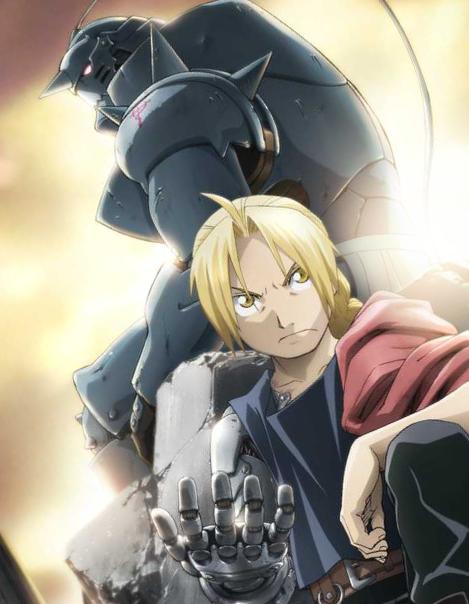
Fullmetal Alchemist


Fullmetal Alchemist is sold in Australia and New Zealand.


Detective Conan

Image from In.com

Detective Conan / Case Closed is sold in Canada, US and UK

I remember that I have a few younger students (one of which is Dicky) who loves spending time on comics. I hope you will like this website I recommended.


Vocabulary:
sarcasm -- (n) [U] the use of remarks which clearly mean the opposite of what they say, and which are made in order to hurt someone's feelings or to criticize something in a humorous way
kidult -- (n) [C] an adult who likes doing or buying things that are intended for children


Resources:
http://lockyep.blogspot.com/2009/03/comics-online-english-manga-free.html
http://www.8manga.com/
http://en.wikipedia.org/wiki/Dragonball
http://lockyep.blogspot.com/2009/03/technology-google-earth-50.html
http://en.wikipedia.org/wiki/Fullmetal_Alchemist
http://en.wikipedia.org/wiki/Detective_Conan
http://dictionary.cambridge.org/dictionary/british/sarcasm
http://dictionary.cambridge.org/dictionary/british/kidult

Friday, 7 May 2010

Vocabulary: Take It Down a Thou(sand)!

Image from Getty Images

Do you read finance news? Every day I wake up in the morning, I will switch on the computer and scan through all finance news. Whenever I pick up an English newspaper, the Business page is always the first page I read. As a result, I learn lots of financial terms.

Like I have always stressed on the importance of variety, and today, I read an article on Bloomberg.com that is masterfully written as it demonstrates the use of variety.


Please read the following article and note that the words in bold:

****************************************************************


U.S., Asia Stocks Tumble as Debt Concern Spurs Electronic Rout

By Darren Boey


May 7 (Bloomberg) -- U.S. stocks tumbled the most in a year as waves of computerized trading exacerbated a selloff triggered by Europe’s debt crisis, sparking a slide in Asian shares.
The rout briefly erased more than $1 trillion in U.S. market value as the Dow Jones Industrial Average fell almost 1,000 points, a 9.2 percent plunge that was its biggest intraday percentage loss since 1987 and largest point drop ever, before paring declines. Japan’s Nikkei 225 Index tumbled 2.7 percent as of 11:57 a.m. in Tokyo. The MSCI Asia Pacific Index slumped 1.5 percent. Markets began to stabilize with Standard & Poor’s 500 Index futures rising 0.5 percent and the euro gaining 2.7 percent against the yen on speculation policy makers from the Group of Seven nation’s will act to stem contagion from Greece’s fiscal crisis.     “People are selling in a panic,” said Hisakazu Amano, who helps oversee the equivalent of $22 billion at T&D Asset Management Co. in Tokyo. “Investors will put money back into risk assets when the Greece issues cool down.”
U.S. stocks were pummeled yesterday amid concerns debt problems will infect other countries in Europe. Computerized trading sent to electronic networks turned the decline into a rout, prompting scrutiny from U.S. regulators. The Nasdaq OMX Group Inc. said it will cancel trades of stocks that moved more than 60 percent. New York Stock Exchange spokesman Rich Adamonis said “there were a number of erroneous trades.”
Japan’s Nikkei was headed for its lowest close since March 5, with companies reliant on European exports leading declines. South Korea’s Kospi Index sank 1.8 percent. Hong Kong’s Hang Seng Index lost 0.5 percent, led by HSBC Holdings Plc, Europe’s largest bank.
Futures Advance
The MSCI Emerging Markets Index dropped 1.3 percent to 935.83, extending this week’s retreat to 8.3 percent, the biggest decline since Feb. 20, 2009.
Futures on the S&P 500 Index rose 0.5 percent to 1,127.70. The Standard & Poor’s 500 Index fell as much as 8.6 percent, its biggest intraday plunge since December 2008, before closing down 3.2 percent at 1,128.15. The Dowaverage closed 3.2 percent lower at 10,520.32. It was the biggest percentage drop on a closing basis since April 20, 2009, for both measures.
The euro rose against the yen and the dollar after Japanese Finance MinisterNaoto Kan said G-7 nations will discuss Greece’s fiscal woes in a conference call today following the slump in stocks. The euro strengthened to 117.43 yen from 114.32 yesterday in New York, when it reached 110.70, the lowest since December 2001. Europe’s currency climbed to $1.2694 from $1.2620.
‘Some Relief’
Treasuries fell, paring the steepest weekly gain in eight months as U.S. stock futures rose, eroding demand for the relative safety of the nation’s debt. The yield on the benchmark 10-year Treasury note rose five basis points to 3.44 percent, according to BGCantor Market Data. The 3.625 percent security due February 2020 fell 3/8, or $3.75 per $1,000 face amount, to 101 17/32.
“There’s some relief in the flight to quality,” said Tomohisa Fujiki, an interest-rate strategist in Tokyo at BNP Paribas Securities Japan Ltd. The company’s U.S. branch is one of 18 primary dealers that trade government debt with the Federal Reserve.
Crude oil rose 0.4 percent to $77.42 a barrel, paring the biggest weekly decline in 10 months. Copper for three-month delivery on the London Metal Exchange lost as much as 2.7 percent to $6,760 a metric ton, and traded at $6,780. Europe’s debt crisis dragged prices down by 8.8 percent this week, the most since the week ending Dec. 5, 2008.
To contact the reporter for this story: Darren Boey at in Hong Kong ordboey@bloomberg.net.
Last Updated: May 7, 2010 00:00 EDT


****************************************************************

Most people reading this will be overwhelmed by this terrible news and the situation, but I am impressed! I now copy those bold words from the article and list them below:

tumbled 
exacerbated a selloff 
sparking a slide 
erased more than $1 trillion in U.S. market value
plunge 
biggest intraday percentage loss 
largest point drop
declines
slumped 
People are selling in a panic
U.S. stocks were pummeled
turned the decline into a rout
Japan’s Nikkei was headed for its lowest close since March 5
extending this week’s retreat to 8.3 percent
fell 
paring the steepest weekly gain
eroding 
dragged prices down

Look at just how many different ways there are to express the meaning "down"!!! Amazing, isn't it?

So the Dow Jones Industrial Average (DJIA) fell almost a 1000 points! If you were watching the charts on your computer monitor at moment, I suppose you might be having a cardiac arrest!

Image from AP


Here's a joke I invented just a minute ago,

I'm imagining Marcus, a guy who had invested his entire life-savings into the US stock market, having a cardiac arrest while witnessing the market plunging, and Dude was trying to save his sorry friend's life by offering him a CPR (or Cardiopulmonary Resuscitation in length).

Dude shouted,
"Damn, Marcus! Damn!"

Due to the lack of oxygen, Marcus' hearing was impeded, so instead of hearing his own name, he heard "Markets".

"Damn, Markets! Damn!"

With all his will, Marcus took his breath of life and asked Dude,
"How... bad ... is it now?"

His friend Dude, still shocked after seeing his good friend collapsed, didn't hear the words and continued to press Marcus' chest,
"Damn, Marcus (Markets)! Stay with me!"
"How... bad ... now?", Marcus murmured.
"Damn! Marcus (Markets)! Take it down a thousand, man!" Dude shouted.

Over-shocked, Marcus collapsed again. His breathing stopped and he had no pulse. Dude had learnt his CPR well so he knew that his chest or abdominal compression had to be rhythmic, so he did the counting while performing the compressions. Just before Marcus' brain stopped functioning, he heard Dude shouting,

"Damn! Markets! 1000! 2000! 3000!"

Will-less, Marcus pushed up daisies.


Vocabulary:
tumble -- [I] to fall a lot in value in a short time
exacerbate -- (vb) [T] to make something which is already bad worse
plunge -- (vb) [I or T usually + adverb / prep] to (cause someone or something to) move or fall suddenly and often a long way forward, down or into something
pummel -- [T] to hit someone or something repeatedly, especially with your fists (=closed hands)
rout -- (n) [C] defeat
retreat -- (n) [C usually singular U] a move back by soldiers or an army, either because they have been defeated or in order to avoid fighting
pare -- (vb) [T often + adverb / prep ] to reduce something, especially by a large amount
erode -- (vb)[I or T] to slowly reduce or destroy
impede -- (vb) [T formal] to slow down or cause problems for the achievement or finishing of something
murmur -- (vb) [I or T]  to speak or say very quietly
Take it down a thousand -- calm down


abdominal -- (adj) related to lower part of a person's or animal's body, which contains the stomach, bowels and other organs, or the end of an insect's body
rhythmic -- (adj) describes a sound with a regular movement or beat which is repeated

"Will-less" -- (adj) [improper & derived] derived from the word, wilful, will-less will thus mean, having no will to live in this case.
push up daisies -- (slang) To be dead and buried


Resources:
http://www.bloomberg.com/apps/news?pid=20601087&sid=azryYMcqKWQ4&pos=1
http://en.wikipedia.org/wiki/Cardiopulmonary_resuscitation
http://en.wikipedia.org/wiki/Cardiac_arrest
http://dictionary.cambridge.org/dictionary/british/tumble_1
http://dictionary.cambridge.org/dictionary/british/exacerbate
http://dictionary.cambridge.org/dictionary/british/plunge_1
http://dictionary.cambridge.org/dictionary/british/pummel
http://dictionary.cambridge.org/dictionary/british/rout_2
http://dictionary.cambridge.org/dictionary/british/retreat_3
http://dictionary.cambridge.org/dictionary/british/pare
http://dictionary.cambridge.org/dictionary/british/erode
http://dictionary.cambridge.org/dictionary/british/impede
http://dictionary.cambridge.org/dictionary/british/murmur_1
http://dictionary.reference.com/browse/take+it+down+a+thou!
http://dictionary.cambridge.org/dictionary/british/abdomen
http://dictionary.cambridge.org/dictionary/british/rhythmic
http://dictionary.cambridge.org/dictionary/british/wilful
http://www.thefreedictionary.com/push+up+daisies