Friday, 17 June 2011

Investment: Why Groupon Is Poised For Collapse

Wow, haven't read articles as insightful as this one for a long time! Everyone who is trying to advertise through Groupon or the likes of it, check this out!


Why Groupon Is Poised For Collapse
Rocky Agrawal Jun 13, 2011
Editor’s note:This guest post is part of an in-depth series looking at the daily deal industry written by Rocky Agrawal, an entrepreneur who has worked on local products since 1995.  Read Part I, Part II, and Part III also.  He blogs at reDesign and Tweets @rakeshlobster.

Imagine you’re a small business owner. You have to choose between two propositions:
  1. You can pay $62,500 for marketing. You’ll get a whole lot of customers coming through your door. No guarantees if they will ever come back, but they’ll come once.
  2. I’ll pay you $21,000. You get $7,000 in about 5 days, another $7,000 in 30 days and the remainder in 60 days. In exchange, you’ll give my customers cheap products for the next year.
I’ve been working on local for a long time and I know it’s hard to get small businesses to spend money on advertising. Really hard. Even getting $200 a month ($2,400 a year) is a high hurdle to meet.
There’s no way a business will sign up for #1. Most merchants would laugh you out of the store if you asked for $60,000.
Except they are. In droves.
Although they sound completely different, #1 and #2 are really the same—it’s the Groupon business model.
Businesses are being sold incredibly expensive advertising campaigns that are disguised as “no risk” ways to acquire new customers. In reality, there’s a lot of risk. With a newspaper ad, the maximum you can lose is the amount you paid for the ad. With Groupon, your potential losses can increase with every Groupon customer who walks through the door and put the existence of your business at risk.
Groupon is not an Internet marketing business so much as it is the equivalent of a loan sharking business. The $21,000 that the business in this example gets for running a Groupon is essentially a very, very expensive loan.  They get the cash up front, but pay for it with deep discounts over time.  (This post applies to Groupon operations in the United States and Canada; it’s different in other parts of the world.)
In many cases, running a Groupon can be a terrible financial decision for merchants. Groupon’s financials also raise questions about its ongoing viability. Buying Groupon stock could be as bad a deal for investors as running a Groupon offer is for merchants.  This is my opinion, but I have some facts to back it up.
Traffic is not necessarily profitable traffic
Groupon can clearly deliver customers. But in order to know if it makes financial sense as a customer acquisition tool, merchants need to know two key numbers:
  1. The proportion of Groupon customers who are already their customers
  2. How often new customers come back.
The higher the first number, the worse their deal will perform. The higher the second number, the better their deal does.
But for most businesses, these critical numbers are impossible to know. Groupons haven’t been out long enough to generate this data.  And Groupon’s tracking methods aren’t collecting this data. (My intuition is that Groupon doesn’t want to know.)
Groupon touts a win-win proposition. But the reality is that Groupon usually wins and merchants usually lose. The merchant agreement is one of the most lopsided I’ve seen.
It’s rare that Groupon loses . . . until merchants figure out how to cheat.
The hidden auction
Underlying Groupon’s success is an auction. It’s not explicit, like Google’s AdWords bidding platform, but the economic effects are similar. The fact that Groupon runs daily deals creates artificial scarcity and drives up pricing to absurd levels. Even with four deals a day in a given market, you’re talking about fewer than 1,500 deals a year.
The “bid” in this auction is the total revenue that goes to Groupon. That’s a function of the value of the voucher, the negotiated revenue share and the number of deals that will be sold. The number of deals that will be sold is a function of, among other factors, how deep a discount and how commonly needed the product is. The larger the discount, the greater the volume.
All of this creates an incentive to drive up Groupon’s revenues. It also provides an incentive for salespeople to sell bigger and bigger deals, some of which might not be suitable for a small business. Because of all the hype around Groupon, salespeople are able to use the “Who’s Who” model—sell what an honor it is to be specially selected to be featured on Groupon.
Groupon’s process for selecting which deals it runs has little transparency. It’s not always the highest bids that win; sometimes, lower value bids win just to keep subscribers opening their emails. (In this case, think of merchants bidding with discounts, so the deeper the discount, the higher the bid).  I’ve also heard from merchants who say Groupon has changed their deals at the last minute to make them more profitable for Groupon.
Cash is king
Many small businesses are struggling for cash and the Groupon sales pitch resonates. Marketing with no upfront payment. You get cash within days. A steady stream of customers. This is not a new idea. Rewards Network has been offering restaurants cash upfront in exchange for discounted meals over time. (But on more generous terms than Groupon.)
Groupon’s S-1 calls tough economic times a risk; but the recession was really their opportunity. As other forms of credit dried up, struggling businesses jumped at the chance to get cash now in exchange for discounting their product later. The real risk for Groupon is that the economy improves to the point that businesses don’t have to resort to deep discounting.
Repeat Groupon businesses
Some of the analysis of Groupon’s long term prospects has pointed to repeat Groupon offers from merchants as evidence of a viable long-term model.
How can a repeat customer be bad, right? For a Groupon merchant, a repeat customer is a great thing. But for Groupon itself, a repeat customer can be a sign of trouble ahead.
I had been struggling to understand why some businesses ran repeat Groupons or cycled among the various daily deal vendors, given that the economics clearly suck if you can’t drive repeat traffic. Some let the same customer buy 3 or more of the same deal. That’s a clear no-no for a loss-leader designed to acquire new customers.
A conversation with Forkfly (a Groupon Now competitor) CEO Paul Wagner was enlightening. He suggested that they were doing what struggling families do when they max out a credit card—they get another one.
That makes perfect sense. Revenue from subsequent daily deals help pay for the obligations created by the first one.
Receipts look like the one at right. Lots of product going out, staff to pay and little cash coming in. Taking out another Groupon loan is a quick fix. (If I were a sales rep, I’d have that date marked on my calendar for follow up. “I know we did 50/50 last time, but I’m thinking Groupon gets 70% this time.”)
Hacking Groupon
How would you exploit an overpriced loan? Don’t pay it back.
Assume that you’re a business that is unscrupulous and you’re looking to make a quick buck. You could create a wildly generous deal that would sell like crazy. In about 30 days, you’ll have 2/3 of your share of the deal. Then you shut down operations.
It also works for businesses that are just having a tough time. As critical as I am of Groupon, the slam dunk case is to sign up with Groupon if you’re going bankrupt. I strongly encourage every business that is about to go under to call Groupon. (Don’t tell them Rocky sent you.) It makes total financial sense—as a Hail Mary play. If you’re lucky, the upfront cash will be enough to help you stay afloat. If not, well, you were already going out of business. It may be your best option. In the short term, you’re actually helping Groupon because they’re being valued on revenue and no one is taking into account risk.
Groupon is essentially holding a portfolio of loans backed by the receivables of small businesses. If a business goes under, consumers will come back to Groupon for their money back. Unless Groupon is actually doing credit assessments on businesses that it chooses to feature, this is a big risk for Groupon.
The onerous terms for participating in Groupon also create an adverse selection problem. The most successful businesses don’t need Groupon for customer acquisition or financing.
The assumption is that nothing will go wrong and all of these “loans” will be paid back. (At least the subprime mortgage lenders were able to sell that risk off to Wall Street and AIG.)
Like the mortgage lenders, Groupon doesn’t know exactly how much risk it has piled up. Because some merchants track redemptions on paper, Groupon has no way of knowing how many unredeemed Groupons are outstanding. If a business goes under and the records are unavailable, every buyer of that Groupon could try to make a claim against it. (The risk is mitigated by the fact that a lot of redemption occurs within the first 60 days, but we don’t know how much.)
Google, with more than $36 billion in cash on hand, is uncomfortable enough with that risk that it dumps it onto Google Offers buyers. Groupon could mitigate this risk by changing its terms and conditions so that the consumer is responsible in case a merchant goes bankrupt.
Relying on float
Where does Groupon get all the money to give to these merchants? Credit cards—yours. Groupon gets paid within a couple of days by its banks. It then takes that money and gives it to the merchant in three chunks. From Groupon’s S-1:
Our merchant payment terms and revenue growth have provided us with operating cash flow to fund our working capital needs. Our merchant arrangements are generally structured such that we collect cash up front when our customers purchase Groupons and make payments to our merchants at a subsequent date. In North America, we typically pay our merchants in installments within sixty days after the Groupon is sold.
We use the operating cash flow provided by our merchant payment terms and revenue growth to fund our working capital needs. If we offer our merchants more favorable or accelerated payment terms or our revenue does not continue to grow in the future, our operating cash flow and results of operations could be adversely impacted and we may have to seek alternative financing to fund our working capital needs.
Translation: They’re using money from new deals to pay for previous deals. They need to keep growing revenue. As of March 31, they owed merchants $290.7 million.
In the agreement I’ve seen, the first installment is 33% in 5 days. If they have to pay merchants faster, that could lead to problems.
And Google might force that to happen. According to Google Offers’ payment terms, merchants receive 80% of their share in 4 days—more than twice as much, 1 day earlier.
There’s no way that was an accident.
If Groupon matches these payment terms, they’ll need cash faster and need to grow faster. (Google Offers accelerates the rate at which Groupon’s scheme has to draw in new suckers.)  If Groupon doesn’t match, it gives Google a key differentiator to win deals. If those businesses  go with Google’s more generous terms, that too will starve Groupon of the cash it needs to pay earlier merchants.
Now here’s the crazy part.  Not only is Groupon effectively giving loans to merchants, but it also works the other way around.  The merchant is on the hook for the entire value of those deals until Groupon pays the merchant back its portion.  Unlike other loan providers, the merchant is making a short-term loan to Groupon. (Not technically, but effectively.) They buy inventory in advance of the Groupon run. They also serve the initial rush of customers. The business is in a hole before they get their 30- and 60-day Groupon payouts.
While the chances might be small, Groupon merchants should know that they’re taking on the risk of Groupon’s collapse. If Groupon collapses, a lot of small merchants could be left holding the bag.
If you know of a business that closed after running a Groupon or other daily deal, please send an email with the name of the business to dailydeals@agrawals.org. And remember,correlation is not causation.
Photo credits: Rachel Lovinger photo of Lisa Greenfield’s House of Cards and Rocky Agrawal.


Opinions:
For our American readers, are you still in line for the Groupon IPO? For our Hong Kong readers, are you a customer or a small business owner? No matter who you are, we all need to be careful, you don't want more Yoga-centre-closure to happen to you just because you have bought some coupons.


Resources:
Why Groupon Is Poised For Collapse @ Tech Crunch
http://techcrunch.com/2011/06/13/why-groupon-is-poised-for-collapse/

Wednesday, 15 June 2011

Medical : Hirudoid & Leeches


Question time! What are the similarities between these two pictures? Take your time and look at them.


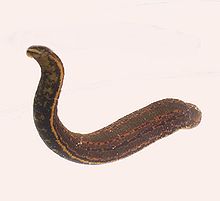
A leech
Image from abhirambharat.webs.com
There is a leg in both pictures? Nah! The answer is very subtle!

Still no clue? Alright! Let me tell you.

First, I think most of you have used Hirudoid, the cream in the first picture, when you have an ugly bruise on your nice legs or arms (hope not on your face, you might want to call the police if you do), but have you ever wondered what bruises are?
A bruise
Image from Wikipedia
Wikipedia defines a bruise as "a type of relatively minor hematoma of tissue in which capillaries and sometimes venules are damaged by trauma, allowing blood to seep into the surrounding interstitial tissues. "[1]

In simple words, a bruise is a slight bleeding outside the blood vessels but inside your skin, forming a packet of blood called a "hematoma" [2]

When that happens, smart people usually grab a tube of Hirudoid and apply on the affected area to speed up the recovery. But what is in the Hirudoid and how does it work?

Hirudoid actually contains an active ingredient called Mucopolysaccharide polysulfate [3] or more commonly known as heparinoid [4][5][6][7] which is derived from heparin [7], a strong anticoagulant which prevents blood from clotting or coagulating.

When you apply Hirudoid, the cream is absorbed into the skin, the blood doesn't clot, and the black and blue will then disappear.

So far, can you follow?
hirudo medicinalis
Image from Wikipedia
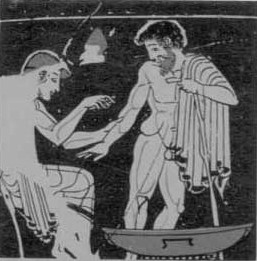
Now, back to the second picture, the leech. To many people, a leech is a terrible creature that drinks blood, but some leeches, namely the European medical leech hirudo medicinalis, have been used for clinical bloodletting for thousands of years, called hirudotherapy[8].

Ancient Greek painting in a vase, showing a physician (iatros) bleeding a patient
Image from Wikipedia
When a leech is attached to a host and begins to feed, it will secrete an anticoagulating (anti-clotting) enzyme called hirudin into the host's blood stream [8], and because hirudin is even better than heparin in some aspects [9],  leeches are once again welcomed in microsurgery[10].

So, you now understand how Hirudoid and Leeches are similar? And you know why Hirudoid is called Hirudoid?

Something extra for you ladies! See below:


Vocabulary:
subtle -- (adj)  approving small but important
Hirudoid
bruise -- (n) [C]  also called a contusion, is a type of relatively minor hematoma of tissue[1] in which capillaries and sometimes venules are damaged by trauma, allowing blood to seep into the surrounding interstitial tissues. 
hematoma -- (n)[C]  is an extravasation of blood outside the blood vessels, generally the result ofhemorrhage. A hematoma is a pocket or localized collection of blood usually in liquid form within the tissue. 
heparinoid -- (n)[U]  are glycosaminoglycans which are derivatives of heparin.
heparin -- (n)[U] also known as unfractionated heparin, a highly-sulfatedglycosaminoglycan, is widely used as an injectable anticoagulant
anticoagulant -- (n)[C] a substance that prevents coagulation; that is, it stops blood from clotting.
clot -- (vb)[I] forming an almost solid piece of something
coagulate -- (vb)[I or T] to change from liquid to a more solid state, or to cause something to do this
black and blue -- with dark marks on your skin caused by being hit or having an accident
bloodletting -- (c)[U] is the withdrawal of often considerable quantities of blood from a patient to cure or prevent illness and disease.
hirudotherapy -- (n)[C] In medieval and early modern medicine, the medicinal leech (Hirudo medicinalis and its congeners Hirudo verbana, Hirudo troctina and Hirudo orientalis) was used to remove blood from a patient as part of a process to "balance" the "humors" that, according to Galen, must be kept in balance in order for the human body to function properly.
microsurgery -- (n) [U] is a general term for surgery requiring an operating microscope.

Resources:
Hirudin @ Wikipedia
http://en.wikipedia.org/wiki/Hirudin

Bruise @ Wikipedia
[1] http://en.wikipedia.org/wiki/Bruise

Hematoma @ Wikipedia
[2] http://en.wikipedia.org/wiki/Hematoma

Safety Data Sheet HIRUDOID CREAM / HIRUDOID SALBE
[3] http://www.briggatemedical.com/pdfs/msds_hirudoid.pdf

Hirudoid Cream @ netdoctor
[4] http://www.netdoctor.co.uk/medicines/100001249.html

Glycosaminoglycan @ Wikipedia
[5] http://en.wikipedia.org/wiki/Glycosaminoglycan

Heparinoid @ Wikipedia
[6] http://en.wikipedia.org/wiki/Heparinoid

Heparin @ Wikipedia
[7] http://en.wikipedia.org/wiki/Heparin

Anticoagulant @ Wikipedia
http://en.wikipedia.org/wiki/Anticoagulant

Leech @ Wikipedia
[8] http://en.wikipedia.org/wiki/Leech

Hirudo medicinalis @ Wikipedia
http://en.wikipedia.org/wiki/Hirudo_medicinalis

Hirudin @ Wikipedia
[9] http://en.wikipedia.org/wiki/Hirudin

Hirudotherapy @ Wikipedia

Microsurgery @ Wikipedia

Monday, 13 June 2011

Usage: Look VS Outlook


Tom Cruise? Good look!
Image from skytitles.com
It may be a cliché to say, "reading can really improve your vocabulary", but it is really true! One good example is the use of 'Outlook' and 'Look'.

Till today, there are still many people using these two words incorrectly. They think that 'out' in the word 'outlook' means external or exterior, and since a person's appearance is on the outside, so they think
'appearance' = 'outlook', but THIS IS SO WRONG!!!


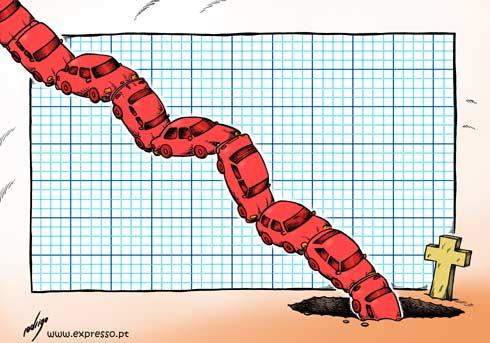
The Outlook of auto market in USA

Published at www.expresso.pt on December 30th, 2008

There is an article below titles "Outlook for China auto market is not optimistic" from  China Business News, and it can be easily seen that 'outlook' has nothing to do with appearance or the face.


From Cambridge Dictionary Online, 'outlook' is in fact the likely future situation whereas 'look' is an expression on someone's face, the look of sb/sth means the appearance of someone or something, sb's look means a person's appearance, especially how attractive they are

As such, you can see that 'outlook' is to do with future situation whereas 'look' is to do with appearance.

Don't make this mistake again!!!!

Vocabulary:
cliché -- (n) [C or U] a comment that is very often made and is therefore not original and not interesting
outlook -- (n) [S] the likely future situation
look -- (n) [C] an expression on someone's face

Resources:
Outlook for China auto market is not optimistic @ China Business News
http://cnbusinessnews.com/outlook-for-china-auto-market-is-not-optimistic/?utm_source=feedburner&utm_medium=email&utm_campaign=Feed%3A+chinabusinessweek+%28China+business+news%29

http://dictionary.cambridge.org/dictionary/british/outlook_1?q=outlook
http://dictionary.cambridge.org/dictionary/british/look_9

Friday, 10 June 2011

Message: "Typhoo-lidays"?


"Tyhoo-lidays"? Slim chance, too fast and too weak. So don't even hope!

"Hope is the worst of evils, for it prolongs the torments of man." -- Friedrich Wilhelm Nietzsche

Anyway, a Sunday "Typhoo-liday" has no meaning.
Forecast Positions and Intensities
Date timePositionClassificationMaximum sustained wind
11:00 HKT 11 June 201123.7 N116.6 ETropical Storm65 km/h
11:00 HKT 12 June 201125.8 N116.6 ELow Pressure Area40 km/h


Resources:
Tropical Storm SARIKA @ Hong Kong Observatory
http://www.hko.gov.hk/wxinfo/currwx/tc_pos.htm

Culture: "Typhoo-lidays", Britons and Weather @ Locky's English Playground
http://lockyep.blogspot.com/2011/06/culture-typhoo-lidays-britons-and.html

Culture: McDonald's Creepiest Ads USA vs Japan


Talking about cultural differences, it seems like this topic can never stop.

I read an article today looking back at the history of Ronald McDonald and his creepiness. Here is one of the videos:


Well, you can read it, watch it however and whenever you like it, but what interests me is how much he looked like a child murderer or a paedophile who is all ready to cut a kid open down his chest with a chainsaw,


Looks familar to you?
Image from movie web
Just as you think, well, this is an old ad, time has changed, Ronald McDonald has become more children-friendly, he really does look happy now (though I can still recall how freaked out my cousin used to be whenever he saw Ronald McDonald), wait till you see the following ads from Japan, the country of in-fashion!


Do you find this burger sexier? The girl actually makes me feel sicker than ever because her face tells me what  will happen to my face after eating that burger.

How about this one?


This one does look better if you don't consider that he took out his burger from his butt!!! And, why did they take out their  glove when they were holding that burger anyway? Especially the guy because he was using his left hand!! With or without the beef, the Indians will definitely not try that burger for sure!

Anyway, I think you can see the difference between the McDonald's ads you see in your country compared to the Japanese ones, they just like that youthfulness and trendiness when they target the young generations.

Okay, let's sidetrack from the culture aspect a bit and spend some time on some serious English listening practice.

And don't forget! BaLa ba ba BA~~~!!!!! (Are you loving it????)


Check if you can pick out these words:
serial killer, torturing, murdering, creep out factor, perfect subjects, afraid of clowns, bounce out, on the verge of death, rigor mortis, bizarre, freak people out, apparatus, personal boundaries, weird, part-clown-part-spider, zombie clowns, subtle, play-acting, a sharpened point, freaky, on death-row, art galleries, haunt


Vocabulary:
creepiness -- (n)[U] noun for "creepy" strange or unnatural and making you feel frightened
paedophile -- (n)[C] UK (US pedophile) a person, especially a man, who is sexually interested in children
rigor mortis -- (n) one of the recognizable signs of death that is caused by a chemical change in the muscles after death, causing the limbs of the corpse to become stiff and difficult to move or manipulate.
bizarre -- (adj) very strange and unusual
subtle -- (adj) small but important


Resources:
Original Ronald McDonald Was Really Creepy @ The Consumerist
http://consumerist.com/2011/06/original-ronald-mcdonald-was-really-creepy.html

McDonalds in Japan @ YouTube
http://www.youtube.com/watch?v=dVcRecCk8sw&NR=1&feature=fvwp

mcdonalds japanese ad @ YouTube
http://www.youtube.com/watch?v=i6n9JBlebFw&feature=related
Killer Clowns Compilation  @ YouTube
http://www.youtube.com/watch?v=FHYkoJumwFE&feature=related

http://dictionary.cambridge.org/dictionary/british/creepy
http://dictionary.cambridge.org/dictionary/british/paedophile?q=paedophile+

Rigor mortis @ Wikipedia
http://en.wikipedia.org/wiki/Rigor_mortis
http://dictionary.cambridge.org/dictionary/british/bizarre?q=bizarre
http://dictionary.cambridge.org/dictionary/british/subtle?q=subtle

Thursday, 9 June 2011

Culture: What Paddington tells us about German v British manners


Hope you find my previous article Culture: "Typhoo-lidays", Britons and Weather  interesting. Another related article that is very much worth reading for anyone who wants to communicate effectively with foreign speakers, in this case, the Germans.


26 May 2011 Last updated at 10:14 GMT

What Paddington tells us about German v British manners


Paddington stories reveal a lot about this cultural difference
Are Germans ruder than the British? Are Britons more dishonest than Germans? Fortunately, we don't have to rely on blind prejudice for answers. Serious academic research has been done on both sides of the North Sea.
There are Britons in Berlin who get taken aback by the directness of Germans. And there are Germans who get really annoyed when Britons (and Americans), in an effort to appear friendly, say things they don't really mean. Some Germans call this "lying".
So, what do the experts say on the matter?
Professor Juliane House, of the University of Hamburg, has studied groups of people interacting in controlled situations, watching with academic rigour how they behave as human guinea-pigs.
She found (or verified) that Germans really don't do small talk, those little phrases so familiar to the British about the weather or a person's general well-being, but which she describes as "empty verbiage".
There is no word in German for "small talk"
In academic language, this is "phatic" conversation - it's not meant to convey hard information but to perform some social function, such as making people feel good.
The German language doesn't even have an expression for "small talk", she says. It is so alien that in the German translation of A Bear called Paddington - Paddington unser kleiner Baer - it was omitted.
So this exchange of small talk occurs in the English original: "'Hallo Mrs Bird,' said Judy. 'It's nice to see you again. How's the rheumatism?' 'Worse than it's ever been' began Mrs. Bird."
In the German edition, this passage is simply cut.
Might a German talk about the weather, then?
But small talk is a staple of social 

interaction in the UK
"In a lift or a doctor's waiting room, talk about the weather in German? I don't think so," she says.
So does that mean the British are more polite? No, just different.
For their part, the British have what House calls the "etiquette of simulation". The British feign an interest in someone. They pretend to want to meet again when they don't really. They simulate concern.
Saying things like "It's nice to meet you" are rarely meant the way they are said, she says. "It's just words. It's simulating interest in the other person."
From a German perspective, this is uncomfortably close to deceit.
"Some people say that the British and Americans lie when they say things like that. It's not a lie. It's lubricating social life. It's always nice to say things like that even if you don't mean them," says House.
Blunt or direct?
For Britons it's German directness that most often gives rise to bafflement or even fury. House, who married a Scouser - a native of Liverpool - gives an example from her own experience.
She would tell her husband to bring something from another part of the house - without the British lardings of "would you mind...?" or "could you do me a favour...?"
He would hear this as an abrupt - and rude - command.
This gap between German directness and British indirectness is the source of much miscommunication, says Professor Derek Bousfield, the head of linguistics at the University of Central Lancashire, and one of the editors of the Journal of Politeness Research.
There are many documented cases where the British understate a very serious problem with phrases like "there seem to be one or two problems here" or "there seems to be a little bit of an issue with this", he says.
British understatement might note that the Grim 

Reaper can rather spoil the mood
A British listener knows there is a gap between what is said and what is meant - and this can be a source of humour, as when the Grim Reaper's arrival at a dinner party in Monty Python's Meaning of Life "casts rather a gloom" over the evening.
Sometimes it's endearing, or at least the British think it is, as when this announcement was made by British Airways pilot Eric Moody in 1982, after flying through a cloud of volcanic ash over Indonesia:
"Ladies and gentlemen, this is your captain speaking. We have a small problem. All four engines have stopped. We are doing our damnedest to get them going again. I trust you are not in too much distress."
But it can also be confusing if you're not used to it.
When BMW bought the British car manufacturer, Rover, it took a while for the seriousness of some of the problems at Rover to sink in. All too often, British managers spoke in euphemisms that their German counterparts took at face value.
Beach towels at dawn
Both professors reject the idea that one nation's manners are better than the other's. Each has its own rules of communication, or patterns of behaviour, and neither can be blamed, they say, when clashes occur.
Reserved your sun-lounger yet?
What about those sun-loungers - the seats by the pool, which German holidaymakers allegedly grab at the crack of dawn?
"I think what you've got there is a clash of prototypical German efficiency with the prototypical British sense of fair play," says Bousfield.
House reckons the British do get the sun-loungers in the end, by one means or another.
"The British want the sun-lounger, but they do it differently," she says.
"Are the British devious? Yes, but why should you directly go for something if it doesn't work? Devious is not a bad thing."

Opinions

Last summer, while I was playing football with some friends I got to meet a German family, the father is German, the wife is HK Chinese, their 3 sons all study in Germany and the elder two aged 18 and 17, plays for the youth squad somewhere in Wolfsburg, with the youngest son aged 10 heading the same route into the world of professional football.

Anyway, I was trying to make small talks with them, but it was difficult for me as they were apparently giving very short responses, gave me a feeling that they didn't really want to talk about their own things, and they don't smile at all when they talk. Their youngest son was the only one whom I chatted well with, because basically, we talked about football while waiting on the side benches. So I guess, as time passes, the younger generations get older, even the Germans will be able to break from the "no Small Talk" rule.

However, if you are working or going to work with the Germans, you can cut all those greetings such as "Nice to meet you", a short "Hello" or "Guten Tag" will do a better job. And you can cut all those small talks that you learn to do. Just go directly into business.


Vocabulary:
at the crack of dawn -- Fig. at the earliest light of the day
devious -- (adj) describes people or plans and methods that are dishonest, often in a complicated way, but often also clever and successful

Resources:
Culture: "Typhoo-lidays", Britons and Weather @ Locky's English Playground
http://lockyep.blogspot.com/2011/06/culture-typhoo-lidays-britons-and.html

What Paddington tells us about German v British manners @ BBC News
http://www.bbc.co.uk/news/world-europe-13545386

http://idioms.thefreedictionary.com/at+the+crack+of+dawn
http://dictionary.cambridge.org/dictionary/british/devious_1?q=devious+