Thursday, 20 September 2012

Science & Environment: How Bad Is The Melting?

Who did this to the skinny polar bear?
Image from ginisnaturenews

Today, as I was finding news to read, I found something so shocking that I immediately want to share with you all.

Do you remember the movie An Inconvenient Truth by Al Gore? I recommended the movie in March 2009 and it was one horror movie indeed. If you don't remember, here's a recap.


But what you are about to see is even more scary than the Al Gore's movie that you may not want to believe it is real.


Here's the caption of the YouTube video you are about to watch:

The sea ice in the Arctic Ocean dropped below the previous all-time record set in 2007. 

This year also marks the first time that there has been less than 4 million square kilometers (1.54 million square miles) of sea ice since satellite observations began in 1979. 

This animation shows the 2012 time-series of ice extent using sea ice concentration data from the DMSP SSMI/S satellite sensor. The black area represents the daily average (median) sea ice extent over the 1979-2000 time period. Layered over top of that are the daily satellite measurements from January 1 -- September 14, 2012. 

A rapid melt begins in July, whereby the 2012 ice extents fall far below the historical average. The National Snow and Ice Data Center (www.nsidc.org) will confirm the final minimum ice extent data and area once the melt stabilizes, usually in mid-September.


At 0:20 sec point as the animation moves from Jun to Jul, you can see how seriously the ice has melted in just 3 months!! Is this real or is it just a scam?


BBC News Science Editor David Shukman went to Ny-Alesund research base in Svalbard, off the shore of Norway to take a closer look at the situation and posted his article on the 7 Sep 2012. And this is what he saw...


Looking at the images below going back in time and you will see how small the Arctic summer ice is this year compared to the previous years as well as the average back in 1979.


The key message in the article is as follows:

"As a scientist, I know that this is unprecedented in at least as much as 1,500 years. It is truly amazing - it is a huge dramatic change in the system," Dr Hansen said.

"This is not some short-lived phenomenon - this is an ongoing trend. You lose more and more ice and it is accelerating - you can just look at the graphs, the observations, and you can see what's happening."


After reading all these, I was overwhelmed by the vast scale of damage that an invisible gas (CO2) can do to our planet. From now on, we should all quickly and critically think about our actions and actively participate in minimising carbon emission.

If everyone plays a part, the world can really be saved.

If you must  use air-con at night, keep it at 25 degree Celsius, switch to the best power-saving air-conditioner if yours has aged.

Use less plastic products and recycle them when their mission is accomplished.

Or even, grow more plants at home if space is allowed.
Clockwise from foreground (Osmanthus, Grapefruit, Chinese bamboo, Ginger, Money tree, Longan)
Image from Locky's English Playground

Save Power, Save the World

Vocabulary:

scam -- (n)[C] informal an illegal plan for making money
unprecedented -- (adj) never having happened or existed in the past
phenomenon -- (n)(plural phenomena) something that exists and can be seen, felt, tasted, etc., especially something which is unusual or interesting
accelerate -- (vb) [I or T] to happen or make something happen sooner or faster
overwhelm  -- (vb) [T usually passive] to cause someone to feel sudden strong emotion
mission  -- (n)  something that you say when you have finished doing something that you were told to do 

Resources:

An Inconvenient Truth (4/10) Movie CLIP - Glaciers (2006) HD @ YouTube
http://www.youtube.com/watch?v=6hFxG-8I0Go

Movie: An Inconvenient Truth @ Locky's English Playground
http://lockyep.blogspot.hk/2009/03/movie-inconvenient-truth.html

The Arctic's Record Breaking Ice Melt @ YouTube
Arctic ice melting at 'amazing' speed, scientists find @ BBC News
http://www.bbc.co.uk/news/world-europe-19508906

Arctic ice melting at 'amazing' speed, scientists find @ YouTube
http://www.youtube.com/watch?v=Hqa9r8sZ6R0

Monday, 17 September 2012

Science: Why Is The Sky Blue? Tyndall & Rayleigh Effect


Old Man & His Puppy
Image from Locky's English Playground
When you look up and see the blue blue sky, have you ever wondered why it is so blue? Is it because oxygen is blue in colour? Or is it a reflection of the blue ocean? Not at all. It is because of the scattering of light.

Flour suspended in water appears
to be blue because only scattered
light reaches the viewer and blue
light is scattered by the flour
particles more strongly than red.
Image and caption from Wikipedia
What physicist John Tyndall explained in 1859 is that when light passes through a clear fluid with small particles in suspension the blue wavelength of light is scattered much more readily then red.

That means, the image on the left can be seen as blue liquid while red light can pass through the glass and reach the table.

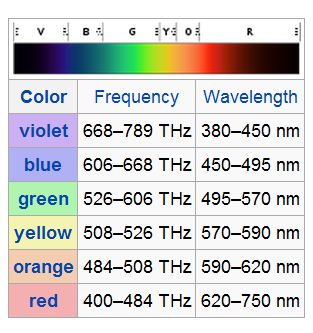
Which goes to explain the fact that since the blue wavelength of the light is shorter (450-495nm) and red wavelength of the light is longer (620-750nm), the shorter the wavelength, the easier it is to be scattered.

Image from NASA
During the time after sunrise and before sunset -- the midday, the sky appears blue because the blue part of the sunlight is scattered by the tiny molecules in our atmosphere, which means the blue light bounces around and thus our eyes interpret the sky as blue in colour.

Tiny molecules in our atmosphere include gases such as nitrogen (78%), and oxygen (21%), argon and water (in the form of vapor, droplets and ice crystals), and many small solid particles, like dust, soot and ashes, pollen, and salt from the oceans.

Image from NASA
When the sun sets, the sun is lowered to a level that red and yellow lights can now reach directly into our eyes, thus the sun appears as red, orange or yellow to us. (Bear in mind that at the same time, other people from another part of the world might be enjoying their lunch, they are also looking at the same sun, but they will see the sky as blue.)

Typhoon Signal 1 Sunset
Image from Locky's English Playground

Visible Spectrum
Image from Wikipedia

Then again, why doesn't the sky appear as other colours, say violet, because violet (380-450nm) is within the visible spectrum and is even shorter than blue(450-495nm)?

Response curves for the three types of cone in the human eye
Caption and image from University of California, Riverside

Well, it is true that there should be red, orange, yellow, green, blue and violet as well, because our eyes are designed to in a way that we can only see electromagnetic waves typically from wavelength of 390nm (nanometre) to 750nm, which is called the visible spectrum of human. However, the retina cone cells (photoreceptor cells) in our eyes are particularly sensitive to, or peak at, three wavelengths of light, for indigo and violet wavelengths, the cones are stimulated and interpret it as blue sky plus slight red tinge, thus we normally don't see indigo and violet sky in the midday.

Tyndall & Rayleigh Scattering : Glass appear as blue while red-orange-yellow
light passes through
Image from Wikipedia

In 1871, British physicist Lord Rayleigh went on to explain similar scattering of light with the addition of his very own formulas, allowing us to calculate the intensity of the scattered light, and the theory is known as Rayleigh Scattering. If you are interested in the details, do read the links provided.

If not, you may still want to have a good time with your kids trying out the flour suspension experiment above. It can make a little fun family activity.

Next time when you look at the sky, you can appreciate the science in it.

Vocabulary:
scattering -- (n)   [C usually singular] a small number or amount of things in a particular area 
bear (in mind) -- (vb) [T] to have or continue to have something
electromagnetic wave -- (n) [C] Electromagnetic radiation (EM radiation or EMR) is a form of energy emitted and absorbed by charged particles, which exhibits wave-like behavior as it travels through space. EMR has both electric and magnetic field components, which stand in a fixed ratio of intensity to each other, and which oscillate in phase perpendicular to each other and perpendicular to the direction of energy and wave propagation. In vacuum, electromagnetic radiation propagates at a characteristic speed, the speed of light.
visible spectrum -- (n) the portion of the electromagnetic spectrum that is visible to (can be detected by) the human eye. Electromagnetic radiation in this range of wavelengths is called visible light or simply light.
retina -- (n) a light-sensitive tissue lining the inner surface of the eye. The optics of the eye create an image of the visual world on the retina, which serves much the same function as the film in a camera. Light striking the retina initiates a cascade of chemical and electrical events that ultimately trigger nerve impulses. These are sent to various visual centres of the brain through the fibres of the optic nerve.
cone cell -- (n)[C] photoreceptor cells in the retina of the eye that are responsible for color vision; they function best in relatively bright light, as opposed to rod cells that work better in dim light.
tinge -- (n) [C] a very slight amount of a colour or of a feeling

Resources:
Tyndall Effect @ Wikipedia
http://en.wikipedia.org/wiki/Tyndall_effect

Why is the sky Blue? @ Department of Mathematics, University of California, Riverside
http://math.ucr.edu/home/baez/physics/General/BlueSky/blue_sky.html

Blue Sky - Why is the Sky Blue? @ science made simple
http://www.sciencemadesimple.com/sky_blue.html

Why is the sky blue? @ NASA's The Space Place
http://spaceplace.nasa.gov/blue-sky/

"Blue Skies: The Size’s the Limit " @ HowStuffWorks
http://science.howstuffworks.com/nature/climate-weather/atmospheric/sky1.htm

Visible Spectrum @ Wikipedia
http://en.wikipedia.org/wiki/Visible_spectrum

Rayleigh Scattering @ Wikipedia
http://en.wikipedia.org/wiki/Rayleigh_scattering

http://dictionary.cambridge.org/dictionary/british/scattering?q=scattering+
http://dictionary.cambridge.org/dictionary/british/bear_2
http://en.wikipedia.org/wiki/Electromagnetic_wave
http://en.wikipedia.org/wiki/Visible_spectrum
http://en.wikipedia.org/wiki/Retina
http://en.wikipedia.org/wiki/Cone_cell
http://dictionary.cambridge.org/dictionary/british/tinge_1?q=tinge

Sunday, 16 September 2012

Technology & Opinions: Zedomax on iPhone 5


Since I haven't got my hands on the iPhone 5 yet, and I suppose you haven't too, so I suppose I really shouldn't barely compare the specs of the iPhone 5 with the Android phones, but XDA Developers senior member Zedomax here has a cool video with some sharp witty points which I must agree!


When the iPhone 5 is out, I will compare it with Galaxy S3 and hopefully Note II in the English Playground.

For now, I'm busy preparing a number of new topics and none has been completed yet, until that's done, here's my last entry for the week.

Enjoy your holidays!

PS: He is being sarcastic in the entire video.


Resources:
iPhone 5 is Magical and Revolutionary! @ YouTube


Wednesday, 12 September 2012

Science, Vocabulary & Song: Once In A Blue Moon

In this Aug. 31, 2012, photo, a small plane passes in front of a "blue moon" 
over the Westchester County airport in Armonk, N.Y. Blue moons are
commonly defined as the presence of a full moon for a second time within a 
single month. This one took place on the day Neil Armstrong, the first man
 to walk on the moon, was laid to rest.
Image and caption from mlive

"One small step for [a] man, one giant leap for mankind." -- Neil Armstrong

Cambridge Dictionary defines  "once in a blue moon" means "not very often", Oxford Dictionary says "very rarely", Hiscock (1999) collected many definitions and sums up the meaning as "incredibly rare", but what is a "blue moon"? Is a blue moon really blue?

The blue moon is not actually blue in colour.

According to Wikipedia's detailed calculated example,

One lunation (an average lunar cycle) is 29.53 days. There are 365.26 days in a solar year. Therefore, about 12.37 lunations (365.26 days divided by 29.53 days) occur in a solar year. In the widely used Gregorian calendar, there are 12 months (the word month is derived from moon) in a year. Each calendar year contains roughly 11 days more than the number of days in 12 lunar cycles. The extra days accumulate, so every two or three years (7 times in the 19-year Metonic cycle), there is an extra full moon. The extra moon necessarily falls in one of the four seasons, giving that season four full moons instead of the usual three, and, hence, a blue moon.

So, a blue moon is the appearance of the third full moon in a season that has four full moons, instead of the usual three. In folklore, it has a different definition. Instead, it is the second full moon in a calendar month.

But can a blue moon be blue?

Blue coloured blue moon, taken using a camera filter
Image from NASA

The answer is YES!!!

NASA Science News has an article talking about the appearance of an actual blue moon in Indonesia back in 1883, when volcano Krakatoa's erupted and shot ashes into the atmosphere,

Some of the ash-clouds were filled with particles about 1 micron (one millionth of a meter) wide--the right size to strongly scatter red light, while allowing other colors to pass. White moonbeams shining through the clouds emerged blue, and sometimes green.

Flour suspended in water appears to be blue
because only scattered light reaches the
viewer and blue light is scattered by the flour
particles more strongly than red.
Image and caption from Wikipedia

I'm suspecting this is the same concept as why the sky is blue -- the Tyndall Effect, and I will talk about that in a future post. For now, I just want to dedicate a song to Mr. Neil Armstrong, the first man on moon.

Neil Armstrong -- First Man on the Moon
Image from littlegreenfootballs
R.I.P. Mr. Neil Armstrong. I will wink at the moon whenever I think about you.

Once In A Blue Moon by Mabel Mercer, from the House M.D. original soundtrack.


Lyrics:
Image from tunewiki

"It suddenly struck me that that tiny pea, pretty and blue, was the Earth. I put up my thumb and shut one eye, and my thumb blotted out the planet Earth. I didn't feel like a giant. I felt very, very small." -- Neil Armstrong
Vocabulary:
once in a blue moon -- not very often
folklore -- (n)[U] the traditional stories and culture of a group of people
erupt -- (vb)[I] When a volcano erupts, it explodes and flames and rocks come out of it
micron  -- (n)[C] one millionth of a meter


Resources:

Hiscock, P. (1999) Folklore of the "Blue Moon"
http://www.ips-planetarium.org/?page=a_hiscock1999


Clayton Hardiman urges us all to wink at the moon @ MLive.com
http://www.mlive.com/opinion/muskegon/index.ssf/2012/09/clayton_hardiman_urges_us_all.html

Clayton Hardiman: #Wink at the Moon. ICY Neil Armstrong @ MLive.com
http://www.mlive.com/opinion/muskegon/index.ssf/2012/09/clayton_hardiman_46.html

Blue moon @ Wikipedia
http://en.wikipedia.org/wiki/Blue_moon

Blue Moon @ NASA Science
http://science.nasa.gov/science-news/science-at-nasa/2004/07jul_bluemoon/

House M.D. - Once In A Blue Moon by Mabel Mercer @ YouTube
http://www.youtube.com/watch?v=tIH0bPelZtU

Once in a blue moon - Mabel Mercer @ Tunewiki
http://www.tunewiki.com/lyrics/mabel-mercer/once-in-a-blue-moon

Apnea @ Wikipedia
http://en.wikipedia.org/wiki/Apnea

Study Shows Half of All Women Found to Have Mild-to-Severe Sleep Apnea @ksee24 news
http://www.ksee24.com/news/local/Study-Shows-Half-of-All-Women-Found-to-Have-Mild-to-Severe-Sleep-Apnea-169108686.html

http://dictionary.cambridge.org/dictionary/british/once-in-a-blue-moon?q=once+in+a+blue+moon#once-in-a-blue-moon__1
http://oxforddictionaries.com/definition/english/blue?q=once+in+a+blue+moon#blue__31
http://dictionary.cambridge.org/dictionary/british/folklore?q=folklore+
http://dictionary.cambridge.org/dictionary/british/erupt_1?q=erupt+

Monday, 10 September 2012

News & Technology: Yucky, Cruel yet Fascinating!

The Register
People normally avoid cockroaches. Don't want to see it, don't want to touch it, deal with it, see it, EVER! Not for this group of scientists, who want to control the movements of cockroaches through electronic means. They attached electrodes to the roach's antenna and two sensors to the insect's sensory organs.

The result? (Pay attention to the "L" and "R" that appears on the screen, I'm guessing that is the moment a scientist press the left or right key on their keyboard)


Cruel experiment, but probably I'm the only one to think in this way.

The actual use of this? Spy roaches maybe. Put on of these into a politician's home and you'll guarantee some secrets.

Dr. Suresh, you have never seen this coming, have you?


The drawback though, may well be the escape once the roach has been discovered. You may have noticed, the insect isn't the fastest runner you have seen, and since this is a flightless Madagascar hissing cockroach, they have no route to escape from a human-discovery by air, a cockroach's the killer feature in my opinion.

What's more, they hiss! You don't want to spy on your babysitter when a cockroach keeps exposing its location, do you?

But who knows? Maybe next time, the scientist will work on flies, much smaller, faster, and "cleaner". Why cleaner?

They always "wash" their "hands".

Washing your hands?
Image from itskerrysworld.blogspot
Vocabulary:
yucky -- (adj) (also yukky) disgusting or unpleasant
roach -- (n)[C] (plural roaches) US informal for cockroach
flightless -- (adj) not able to fly
hissing -- (adj) [I] to make a noise which is like the first sound in the word 'sing' but which lasts a lot longer


Resources:
Boffins computerize giant cyborg cockroaches @ The Register
http://www.theregister.co.uk/2012/09/06/computer_controlled_cockroaches/

Roach Biobot @ YouTube
http://www.youtube.com/watch?v=gmbEX7zDzog

cockroach theory on heroes @ YouTube
http://www.youtube.com/watch?v=296XA4lqjtA

List_of_characters_in_Heroes#Shanti_Suresh @ Wikipedia
http://en.wikipedia.org/wiki/List_of_characters_in_Heroes#Shanti_Suresh

Madagascar hissing cockroach @ Wikipedia
http://en.wikipedia.org/wiki/Madagascar_hissing_cockroach

http://dictionary.cambridge.org/dictionary/british/yucky?q=yucky
http://dictionary.cambridge.org/dictionary/british/roach_2
http://dictionary.cambridge.org/dictionary/british/flightless?q=flightless+
http://dictionary.cambridge.org/dictionary/british/hiss_1?q=hissing+#hiss_1__3

Wednesday, 5 September 2012

Technology: Phabletious!! Samsung Galaxy Note II


Samsung Galaxy Note II
Image from GSMArena

I must say my motivation for compiling my first XDA Developer tutorial Technology: Turning your Galaxy S2 to Galaxy S2.5!!! originates from my fondness of the Samsung Galaxy S3, it was a truly amazing device with handful of innovative functions and enormous potential!

Samsung Galaxy S3 GT- i9300 is already a speedy device, with 1.4GHz quad-core Exynos 4 processor and 1GB RAM (or 1.5Ghz Qualcomm Snapdragon S4 with 2GB RAM for the US and JP variants), 4.8" Super AMOLED PenTile display and a 2100 mAh battery pack, weighing 133g in total; running Android 4.0.4 Ice Cream Sandwich.
Samsung Galaxy S3
Image from GSMArena


But Samsung has pushed the standard even higher in the the recently announced Samsung Galaxy Note II, which comes with a 1.6GHz quad-core Exynos 4412, 2 Gb RAM, 5.5" Super AMOLED non-PenTile display and a 3100 mAh battery, weighing 180g in total and running; running Android 4.1.1 Jellybean.


S3's PenTile display, though lasts longer, has caused a lot of dismay among users who were expecting an HD Plus version. This time with Note II, Samsung has cleverly invented a new matrix that is different from the RGBG PenTile one to regain the trust of the Galaxy fans.

Image from Phonearena and The Verge
With the oval green pixels now lined parallel to the oval red and perpendicular to the thin blue ones, the Galaxy Note II does look sharper, clearer and more dense than the old matrix, so despite having a lower ppi pixel density than the Galaxy S3 (720x1280p in 5.5" VS 720x1280p in 4.8"), the Galaxy Note II can still look pretty sharp!!!!

Phabletious!!!!


Samsung Galaxy Note II
Image from GSMArena
In terms of design, not only is Note II thinner than Note in numbers (9.4mm VS 9.7mm), it does actually look thinner due to the more pronounced corners at the back of the phone.

Note II (top) is obviously thinner than Note
Image from CNET

The cover is even better than the HTC One X this time, seems like Samsung has really heard the users' voices.

Rear view. The Galaxy Note 2 (right) uses a metal cover instead of a textured plastic version.
Caption and Image from CNET Asia

In terms of functions, it is a MONSTER!!! Here's a video,


No wonder people will need to go for a class to learn them all! I really like the Best Face function!

As a senior member of the XDA Developers, I must say Samsung's developer team has really got brains, the ideas could have been suggested by some XDA Developers, as Samsung is actually working with the XDA Developers, but it is Samsung that makes it happen. I am impressed!

In terms of performance?

Note II hitting 6120 on the Qudrant Benchmark
Image from CNET Asia
I didn't get the Galaxy S3, but I am now seriously considering getting the Note II, hope I will be able to save up enough money by then.


For details, do visit GSMArena's Samsung Galaxy Note II preview: First look and CNET Asia's Hands-on: Samsung Galaxy Note 2 - Mobile Phones.

Quick Commentrs:
Phonearena : Samsung has weighed things well enough where it counts for it to be worthy upgrade.

GSMArena: Our short time with the Samsung Galaxy Note II is over, but it was enough to whet our appetite and we'll surely be coming back for more.

CNET:

Vocabulary:
variants
phabletious -- (adj) a word created by Noisy Biatche from TechieBiatche, a kind of wordplay, from fabulicious -- (adj) from fabulous (adj) + delicious (adj)
phablet -- (n)[C] Phablet is the term by which some touch-screen devices with screens of 5+ inches are referred to. A phablet is a device that combines the capabilities of a smartphone and mini tablet. Bigger than a smartphone, but not large enough to be considered an actual tablet or even mini-tablet, the range of screen size of a phablet falls anywhere greater than or equal to 5", but less than 7".


Resources:

Technology: Turning your Galaxy S2 to Galaxy S2.5!!! @ Locky's English Playground
http://lockyep.blogspot.com/2012/06/technology-turning-your-galaxy-s2-to.html

Technology: HOLY SMOKE!!! Galaxy SIII As A PC???!!! @ Locky's English Playground
http://lockyep.blogspot.hk/2012/06/technology-holy-smoke-galaxy-siii-as-pc.html

Technology & Event: Samsung Galaxy SIII Reviews @ Locky's English Playground
http://lockyep.blogspot.hk/2012/05/technology-event-samsung-galaxy-siii.html

Samsung Galaxy S III @ Wikipedia, the free encyclopedia
http://en.wikipedia.org/wiki/Samsung_Galaxy_S_III#Hardware_and_design

Samsung Galaxy Note II @ Wikipedia, the free encyclopedia
http://en.wikipedia.org/wiki/Samsung_Galaxy_Note_II

Pentile News @ Oled-info
http://www.oled-info.com/tags/pentile

Samsung Galaxy Note II N7100 vs. Samsung I9300 Galaxy S III @ GSMArena.com
http://www.gsmarena.com/compare.php3?idPhone1=4854&idPhone2=4238

Samsung Galaxy Note II N7100 @ GSMArena
http://www.gsmarena.com/samsung_galaxy_note_ii_n7100-4854.php

[GALAXY Note II] First Hands-on Video @ YouTube
http://www.youtube.com/watch?v=5DcgZum8M1o

Samsung Galaxy Note II preview: First look @ GSMArena
http://www.gsmarena.com/samsung_galaxy_note_ii_n7100-review-806.php

Hands-on: Samsung Galaxy Note 2 - Mobile Phones @ CNET Asia
http://asia.cnet.com/product/samsung-galaxy-note-2-

http://myfavtechy.blogspot.hk/2012_03_01_archive.html
http://en.wikipedia.org/wiki/Phablet