|
| "There is no agreed phonetic definition of a syllable" -- Ladefoged (1982, p219) Image from Peter Ladefoged's homepage |
"There is no agreed phonetic definition of a syllable" -- Ladefoged (1982, p219)
Last year, one of my students who happens to be an IPA teacher with a Master's degree in Translation, spotted something pretty interesting when I was introducing the word "masseur".
 |
| Image from Cambridge Dictionary Online |
She argued that the stress mark should be before the /s/ not after it, according to the rules she has learnt. She suspected that this is a typo made by Cambridge University.
To my knowledge, having a primary stress on a vowel alone is not unusual at all, according to my hundreds of hours of blog-writing (thus my exploitation of the Cambridge Dictionary Online), but at that moment, I couldn't come up with a counter-example. She was convinced with what she knew and stressed that by telling me she was an IPA teacher, and I was also sure with what I know, and so she challenged me to find another example on the Cambridge Dictionary Online, or if the same word "masseur" shows up with the same IPA. Subsequently, the situation got worse and I even received a complaint from her through my boss. My ex-boss, who is a fervent supporter of the Oxford Dictionary, was on her side and instructed me never to teach IPA in class again because "you are wrong!" I found no point of arguing with her and also pointless to even think about educating her, and so I pretended to have accepted her view.
Why should I make her smarter if they insist that they are smarter, right?
But am I really wrong? Of course not, not in this case. What they do not know is the most fundamental concepts of pronunciation.
Now that things have cooled down, I can explain the logic and reasons behind.
 |
| Notice the difference in IPA for the same word by different dictionaries Image from Academic Dictionaries and Encyclopedias |
Now, here's something we must know. If we check different authoritative dictionaries, we are bound to get many different IPA representations for the same word. How's that possible?
The answer is both political and commonsensical.
It is political because of the way these dictionary authorities, such as Cambridge, Oxford, BBC, Colins, Longman, Webster, Merriam-Webster, etc., they are not friends and they don't share their researches. Sponsors or funded money is spent on top-secret data collections, data processing and computer programs.
It is also commonsensical since they basically use different algorithms to work on different lexico-grammatical and phonological data collected from different regions of the world, few, if any, of the linguistic features such as IPA, grammar, meanings, translations will be the same. Why would it be the same anyway if there is something called copyright and patent infringement? Just ask Apple Inc. about copyrights and patents!
What's more, I believe that there is in fact no 100% foolproof rule to anything on this planet. I used to believe that there is something that is absolutely right and absolutely wrong when I was a kid, just to realise that there are something called grey areas eventually.
When a theory or a rule is wrong, people set a new boundary and then set a new rule, and the new rule remains correct until someone disproves it. The subject of science works exactly this way. Remember that our Earth was once believe to be a cube and travelling too far off the ships would fall off the edge of the world?
Let's not forget, we are dealing with English, a language which has borrowed, devoured, digested and "stolen" from over 350 languages around the world since 450 AD, sometimes, or most of the time, which English word belongs to which language is a tough task to trace. Then how can one IPA rule bound every word in the English language? Quite impossible.
Anyway, I find this question really challenging and here's what I've found!



 |
| Images from Cambridge Dictionary Online |
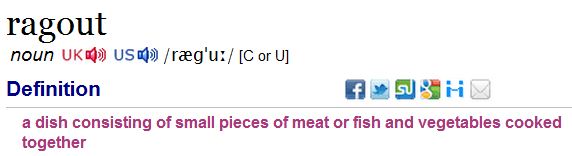
Could this primary-stressed vowel pattern mainly happens in French loanwords? I doubt it. Dutch, in particular, is well-known for their stressed vowels.
Could this primary-stressed vowel pattern only appears in Cambridge Dictionary Online? Not sure, but I checked every one of these words in the Oxford Dictionaries, and none of them shows this pattern.


 |
| Images from Oxford Dictionary Online |
Anyway, I would very much like a clarification on that from the Cambridge University Press to make my student happy, so I wrote Cambridge University Press an email at 1:45am (now it's 2:33am, 26th July 2013), the response that I received was, they will follow up, and they never did.
That being said, you can try searching words like "ergo", "earnings", "urgent", "also", always", "pronunciation" and see the same pattern of primary-stressed vowel.
Back to my point, I believe that there is hardly any rules which can always be true (this is something I have learnt from Dr. House), pronunciation models are forever changing as humans evolve, what the quote from Ladefoged back in 1982 at the beginning of this post is very much still valid today, even with the advance technology that we possess right now. Syllabification, the separation of a word into syllables, whether spoken or written, is a complex topic in linguistics study and like everything academic, it is heavily argued and debated.
I must say I do not know everything, but you do not need to be a genius to know that nothing is true forever.
So, as common learners of English, whether you belong to the ESL, EFL, ESP or EAP group, when learning IPA, I have one advice -- don't be too rigid.
I must say I do not know everything, but you do not need to be a genius to know that nothing is true forever.
So, as common learners of English, whether you belong to the ESL, EFL, ESP or EAP group, when learning IPA, I have one advice -- don't be too rigid.
"Empty your mind, be formless, shapeless, like water." -- Bruce Lee
 |
| The Analysis of French Schwa Image from Jstor |
 |
| Image from Wiktionary |
For more articles on IPA, do visit my IPA page.
Vocabulary:
masseur -- (n)[C] a person whose job it is to give massages to people
typo -- (n)[C] informal a small mistake in a text made when it was typed or printed
fervent (also fervid) formal-- (adj) describes beliefs that are strongly and sincerely felt or people who have strong and sincere beliefs
fervent (also fervid) formal-- (adj) describes beliefs that are strongly and sincerely felt or people who have strong and sincere beliefs
authoritative -- (adj) containing complete and accurate information , and therefore respected
commonsensical -- (adj) the basic level of practical knowledge and judgement that we all need to help us live in a reasonable and safe way
bound to do sth-- certain to do something; destined to do something.
foolproof -- (adj) (of a plan or machine ) so simple and easy to understand that it is unable to go wrong or be used wrongly
devour -- (vb)[T] to eat something eagerly and in large amounts so that nothing is left
trace -- (vb)[T] to find the origin of something
syllabification or syllabication -- (n)[U] the separation of a word into syllables, whether spoken or written.
syllabification or syllabication -- (n)[U] the separation of a word into syllables, whether spoken or written.
Resources:
IPA @ Locky's English Playground
http://lockyep.blogspot.hk/search/label/IPA
IPA & Website: Peter Ladefoged's IPA Home Page @ Locky's English Playground
http://lockyep.blogspot.hk/2010/10/ipa-website-peter-ladefogeds-ipa-home.html
The History of English in 10 Minutes @ YouTube
http://www.fon.hum.uva.nl/diana/papers/Chapter_2_Grammatical_vs_Lexical_Stress.pdf
Stress @ Wikipedia
http://en.wikipedia.org/wiki/Stress_(linguistics)
The Analysis of French Shwa : Or, How to Get Something For Nothing? @ Jstor
http://www.jstor.org/discover/10.2307/413848?uid=3738176&uid=2134&uid=367753221&uid=2&uid=70&uid=3&uid=367753211&uid=60&sid=21101650914611
Whatever happened to Received Pronunciation? J.C. Wells, UCL
http://blog.sina.com.cn/s/blog_4a7c82560101nvlj.html
Ladefoged, P. 1982. A Course in Phonetics (2nd ed.). New York: Harcourt Brace Jovanovich
Syllabification @ Wikipedia
http://en.wikipedia.org/wiki/Syllabification
Phonetic cues to syllabification
http://escholarship.org/uc/item/2497n8jq#page-112
http://dictionary.cambridge.org/dictionary/british/masseur?q=masseur
http://en.wiktionary.org/wiki/masseur#French
http://idioms.thefreedictionary.com/bound+to+do
http://dictionary.cambridge.org/dictionary/english-chinese-traditional/foolproof?q=foolproof+
http://dictionary.cambridge.org/dictionary/english-chinese-traditional/devour?q=devour+
http://dictionary.cambridge.org/dictionary/english-chinese-traditional/trace_1?q=trace+
http://dictionary.cambridge.org/dictionary/english-chinese-traditional/trace_1?q=trace+
http://dictionary.cambridge.org/dictionary/english-chinese-traditional/common-sense?q=commonsensical+
http://dictionary.cambridge.org/dictionary/english-chinese-traditional/fervent?q=fervent
http://dictionary.cambridge.org/dictionary/english-chinese-traditional/authoritative?q=authoritative+
http://dictionary.cambridge.org/dictionary/english-chinese-traditional/typo?q=typo
Stress @ Wikipedia
http://en.wikipedia.org/wiki/Stress_(linguistics)
The Analysis of French Shwa : Or, How to Get Something For Nothing? @ Jstor
http://www.jstor.org/discover/10.2307/413848?uid=3738176&uid=2134&uid=367753221&uid=2&uid=70&uid=3&uid=367753211&uid=60&sid=21101650914611
Whatever happened to Received Pronunciation? J.C. Wells, UCL
http://blog.sina.com.cn/s/blog_4a7c82560101nvlj.html
Ladefoged, P. 1982. A Course in Phonetics (2nd ed.). New York: Harcourt Brace Jovanovich
Syllabification @ Wikipedia
http://en.wikipedia.org/wiki/Syllabification
Phonetic cues to syllabification
http://escholarship.org/uc/item/2497n8jq#page-112
http://dictionary.cambridge.org/dictionary/british/masseur?q=masseur
http://en.wiktionary.org/wiki/masseur#French
http://idioms.thefreedictionary.com/bound+to+do
http://dictionary.cambridge.org/dictionary/english-chinese-traditional/foolproof?q=foolproof+
http://dictionary.cambridge.org/dictionary/english-chinese-traditional/devour?q=devour+
http://dictionary.cambridge.org/dictionary/english-chinese-traditional/trace_1?q=trace+
http://dictionary.cambridge.org/dictionary/english-chinese-traditional/trace_1?q=trace+
http://dictionary.cambridge.org/dictionary/english-chinese-traditional/common-sense?q=commonsensical+
http://dictionary.cambridge.org/dictionary/english-chinese-traditional/fervent?q=fervent
http://dictionary.cambridge.org/dictionary/english-chinese-traditional/authoritative?q=authoritative+
http://dictionary.cambridge.org/dictionary/english-chinese-traditional/typo?q=typo