Tuesday, 23 November 2010

News & Economics: 15 minus 15 Isn't Zero --The Tug-of-war between Demand and Supply

Took a short break on Monday and got myself a whole lot more work to do instead, which got me to sleep at 3:30am last night, so today, I'm mind-detached-from-body right now. Allow me to talk about something simple.

News from the Standard today:

Developers lash stamp duty hikes

Tuesday, November 23, 2010


The Real Estate Developers' Association lashed out yesterday at the government's stamp duty hike and other measures taken to temper runaway property prices, saying they will harm end-users more than speculators.


"Speculators would undoubtedly be hard hit directly," said REDA vice- chairman Stewart Leung Chi-Kin.

"But some end-users, who try to cut losses due to market changes, will suffer at least a 15 percent loss."

Raising the downpayment will also hurt potential homebuyers, added Leung, who is also executive director of New World Development (0017).

"This goes totally against what the government has been saying" to help the common man, he said.

Economic Synergy legislator Sophie Leung Lau Yau-fun said raising the downpayments might make it harder for young people to buy their first homes. But Secretary for Transport and Housing Eva Cheng Yu-wah insisted that potential homebuyers would benefit if speculation is curbed.

Lawmaker Paul Chan Mo-po pointed out a possible loophole in the rules, as buyers and sellers could avoid paying the high stamp duty simply by putting the property in question under the name of a company registered overseas.

A sale would then involve selling the company - not the property - so there would be no stamp duty, he said.
Commissioner of Inland Revenue Chu Yam-yuen conceded speculators could take advantage of the situation as it's difficult to track share-holdings of offshore firms.

Meanwhile, several international fund houses said they expect home prices to slide by 5 to 10 percent in the coming months, and sales volume to tumble.

"Property transactions will fall by 20-30 percent," UBS researcher Eric Wong Chun-ya wrote in a report, released yesterday.

Credit Suisse analysts Cusson Leung and Joyce Kwock forecast home prices to drop 5 percent by the year-end, with transactions plunging 40 percent due to what they called "harsh" measures.

Lucia Kwong at JPMorgan described the step as "strong dose to calm down the housing market."
Agents reported many buyers are pulling out of deals at the last moment.

"Those who signed preliminary contracts between November 6 and 19 are leaving," said Patrick Chow Moon- kit, research head at Ricacorp Properties.

He added some sellers are now cutting prices by 10 percent.

TONY LIAW AND COLLEEN LEE


Vocabulary:
speculator --  (n)[C] a person who buys goods, property, money, etc. in the hope of selling them at a profit
downpayment / down payment-- (n)[C] an amount of money that you pay at the time that you buy something, but which is only a part of the total cost of that thing. You usually pay the rest of the cost over a period of time
curb -- (n) [C] a limit on something that is not wanted
loophole -- (n)  [C] a small mistake in an agreement or law which gives someone the chance to avoid having to do something
offshore -- (adj) (of companies and banks) based in a different country with different tax rules that cost them less money
tumble -- (vb)  [I] to fall quickly and without control or to fall a lot in value in a short time
harsh -- (adj) unpleasant, unkind, cruel or unnecessarily severe
pulling out of deals from "pull sb/sth out"-- (phrasal verb) to stop being involved in an activity or agreement
preliminary  -- (adj) [before noun] coming before a more important action or event, especially introducing or preparing for it
wuss -- (n) [C] slang a coward (= person who is not brave)


Opinions:


Image from blogcdn.com


For those who do not own an apartment, like me, this seems like a really good news, and there is nothing better than to see the property price drop lower. The question is, when will the drop begins and when will it end? When will then be a good time to buy in?

5 to 10% drop in the coming months sounds like a pretty safe and reasonable guess by the international fund houses, but will it stop there and rebound? A number of famous people have said that price will jump 20-40% in the coming year too, but that was before the government took action, which proves that experts can be wrong, very wrong too!

I think, since the new rule of the game is that a stamp duty of 15% of the transaction cost will be charged upon the buyer, then logically thinking, a near 15% drop in property price is needed to regain the transaction activity before the announcement of new rule. However, there are some bad assumptions in this thinking......because "15 minus 15 Isn't Zero", because the Tug-of-war between Demand and Supply isn't linear.

The first assumption made by most bullish analysts was that HK government does not dare to do anything to harm the housing market after the 1997 "85,000 incidence" was already a really really bad assumption. It is like saying that a kid burnt in the fingers by lighter flame dare not use his stove. The fact is, any government has the power to ruin the property market if she wants to, the question is, do they need to go so far? I personally think that the John Tsang has done a great job here, showing speculators that the HK government isn't a wuss.

The second assumption is that, if the transaction activity really does return to the earlier level, when people were buying and selling quickly for short term gain, will the government just wait and see once more? Or will she say, "okay, let's make it 20% stamp duty if you sell within 6 months!" You see, once the rules are set, only a small amendment is needed to continue.

So, "to buy or not to buy?" "To wait or not to wait?" "To put your money in your pocket or someone else's?"


Fruit for thoughts!

Image from neurosoftware.ro


Resources:
http://www.thestandard.com.hk/news_detail.asp?we_cat=11&art_id=105244&sid=30391242&con_type=1&d_str=20101123&fc=2

http://dictionary.cambridge.org/dictionary/british/speculator
http://dictionary.cambridge.org/dictionary/british/down-payment#down-payment__3
http://dictionary.cambridge.org/dictionary/british/curb_2
http://dictionary.cambridge.org/dictionary/british/loophole
http://dictionary.cambridge.org/dictionary/british/offshore_2
http://dictionary.cambridge.org/dictionary/british/tumble_1
http://dictionary.cambridge.org/dictionary/british/pull-sb-sth-out_2#pull-sb-sth-out_2__2
http://dictionary.cambridge.org/dictionary/british/preliminary_1

Friday, 19 November 2010

Business Writing: How to write like a pro? -- Part 2

First, let me thank those of you who did try. Well done. Like I always said, you will learn more if you do it. If you just read, that's okay, but you'll never learn as much. I hope I will see more readers of this blog trying.

Let's check our homework first. The question from last week was,

Poor show by MTRC
I think MTR Corp did not handle the situation well. It did not give enough information to commuters. There was a chaotic situation because passengers could not find their way easily to other transport modes. Perhaps the MTRC should send more staff and call the police for help in future situations.

Content words: 28
Total words: 51
Lexical density = 54.9%

And my version is as follows,


Poor show by MTRC
MTR Corp’s failure to inform commuters of the routes of transit to other means of transport caused chaos thus more assistance from staff and police is necessary. 


Content words: 17

Total words: 27
Lexical density = 63.0%
Words saved compared with previous version = 28 - 17 = 11 = 39.3%

Now, there are many ways you can rewrite that, so I am just suggesting one of them. If you look at my sentence and do the statistic, you will see that even though my version is not much more packed than the original version, the number of words I used is much fewer (only 27 words in total), so I can say that my version may be more difficult for beginner readers, but it is definitely more professional when you read it. 


And I have saved 11 words (39.3% ). If in one sentence I can save this much, imagine I am going to write an essay of 2500 words? How many words can I save? Or how much more information can I put inside with the same number of words?


How to write lexically dense sentences:
This is the easiest version I am teaching.

First, you need to know what is subject, verb and object, and write a simple sentence such as

  • MTR caused chaos.
Then you add pre-modifiers and post-modifiers

From Wikipedia, "A premodifier is a modifier placed before the head (the modified component). A postmodifier is a modifier placed after the head".

Pre-modification : The mishandling by the MTR
Post-modification : MTR's poor handling of the situation

From here, you can expand 

"MTR Corp caused chaos, assistance is necessary" 

into something that looks like my sentence below, with keywords in bold.

  • (MTR Corp’s failure to inform commuters of the routes of transit to other means of transport) caused chaos thus (more assistance from staff and police) is necessary. 
After a sequence of pre-modification and post-modification, you can arrive at a very long sentence with lots of information in it.

Homework Time:
Try making this sound more professional, and also, have fun watching the videos.


Dr. Samuel Johnson was born in Great Britain. He was born on 18th September 1709. He was an author and he is most famous for his work Dictionary of the English Language. The dictionary was published in 1755. The dictionary took him 9 years to finish writing.

Black Adder the Third is a English TV series. In the episode Ink and Incapability (1987), Dr. Samuel Johnson has only one copy of his dictionary. Blackadder's servant Baldrick burnt it and Blackadder has only one weekend to rewrite it. (Image from accordingtowhim.com)
Blackadder the Third -- Ink and Incapability script


Resources:
Previous Entry --Business Writing: How to write like a pro? -- Part 1
http://lockyep.blogspot.com/2010/11/business-writing-how-to-write-like-pro_12.html


Premodifier and Postmodifier  @ Wikipedia
http://en.wikipedia.org/wiki/Grammatical_modifier


Blackadder the Third @ IMDb
http://www.imdb.com/title/tt0526724/

Blackadder the Third -- Ink and Incapability script
http://humour.50megs.com/blackadder/ba32.html

Blackadder the Third -- Ink and Incapability @ YouTube
http://www.youtube.com/watch?v=08xKZfuH6oI

Thursday, 18 November 2010

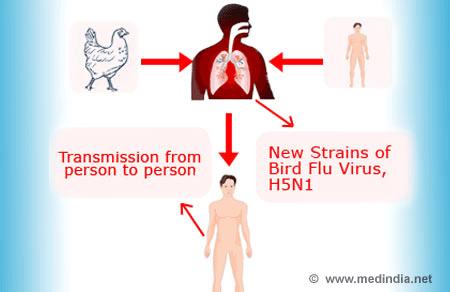
News: Government mulls bird flu response

Not much today, just some light reading, because tomorrow, it will be business writing and you'll need to pay more attention.

Image from medindia.net

The first news is from RTHK and the second from Miami Herald, both from today's internet. You can also pay attention to the writing style.


Government mulls bird flu response
18-11-2010
The Health Secretary, York Chow. File Photo
The Health Secretary, York Chow, is to chair an interdepartmental meeting today to decide if precautionary measures are needed after the government raised Hong Kong's bird flu alert level to "serious" yesterday. Dr Chow said raising the response level meant there was a risk of contracting bird flu in the region.The move comes after the territory confirmed its first human bird flu case in seven years yesterday. A 59-year-old woman is in a serious condition in Tuen Mun hospital. She had recently returned to the SAR from mainland China.
The bird flu virus first crossed the species barrier to infect people in the SAR in 1997. Six people died in that outbreak - and all chickens were culled locally.


Hong Kong officials meet after bird flu confirmed

THE ASSOCIATED PRESS


Hong Kong has confirmed its first case of human bird flu in seven years.
Health Secretary York Chow said late Wednesday that a 59-year-old woman had tested positive for H5N1 bird flu after returning to Hong Kong from the Chinese mainland, and is in serious condition in a local hospital.
With the announcement, the government raised the bird flu alert to "serious," meaning there is a risk of contracting the disease within the territory.
Chow said Hong Kong officials were meeting Thursday and would determine whether additional measures are needed to safeguard local residents.
The bird flu virus first struck Hong Kong in 1997. Six people died in that outbreak and all chickens in the territory were culled.

Looks like we will be seeing more government ads on TV. Lucky that I am not a big fan of chicken meat.


Vocabulary:
mull -- from "mull sth over" 

phrasal verb 


[M] 
to think carefully about something for a long time
precautionary -- (adj) about an action which is done to prevent something unpleasant or dangerous happening
barrier -- (n) [C] anything that prevents people from being together or understanding each other
outbreak --(n) [C] a time when something suddenly begins, especially a disease or something else dangerous or unpleasant
cull -- (vb) [T] When people cull animals, they kill them, especially the weaker members of a particular group of them, in order to reduce or limit their number
contract -- (vb) [T] slightly formal to catch or become ill with a disease
safeguard -- (vb) [T] to protect something from harm


Resources:


RTHK
http://www.rthk.org.hk/rthk/news/englishnews/20101118/news_20101118_56_713510.htm
Miami Herald -- World AP
http://www.miamiherald.com/2010/11/17/1931375/hong-kong-officials-meet-after.html

http://dictionary.cambridge.org/dictionary/british/mull-sth-over#mull-sth-over__2
http://dictionary.cambridge.org/dictionary/british/precaution
http://dictionary.cambridge.org/dictionary/british/barrier_2
http://dictionary.cambridge.org/dictionary/british/outbreak
http://dictionary.cambridge.org/dictionary/british/cull
http://dictionary.cambridge.org/dictionary/british/contract_3
http://dictionary.cambridge.org/dictionary/british/safeguard

Monday, 15 November 2010

Environment: Tetra Pak Carton Recycling

Okay, since I think you will need some time to try out the homework I have assigned to you last week, so I will postpone my blog entry on writing till Friday. Till then, we will look at some simpler things and hopefully I can raise your awareness in this.

When you buy some packet drinks from a supermarket, you actually buy the carton as well. You drink the liquid and throw away the carton. But do you know that the carton is actually designed to be recyclable?

Image from ecosherpa.com

Now, don't start throwing your milk carton into the recycle bins if you are in Hong Kong, because nope, Hong Kong doesn't help with the recycling of milk carton. In UK, they do. From the Local Government Channel,

"Tetra Pak
Tetra Pak is committed to boosting carton recycling rates in the UK. In this year alone, they have announced a £300,000 fund available for local authorities wanting to establish carton collection schemes in their area and have hired a national recycling officer dedicated to making sure it happens."


Exactly, how they do this? Here is a not-so-interesting but informative video to watch:


What is really inside a Tetra Pak container?
Image from Wikipedia

That means, it contain lots of plastics, paper and aluminium, which theoretically speaking, can all be recycled.

And here is a video of a recycle factory of Tetra Pak in action:


So, what has the Hong Kong government do about this carton recycling? They wanted more land for rubbish dumping, of course!


Homework:
How come I used  "theoretically speaking" when I wrote "That means, it contain lots of plastics, paper and aluminium, which theoretically speaking, can all be recycled"?

Resources:
Local Government Channel in UK
http://www.localgovernmentchannel.com/news/v/carton_recycling_let_s_make_it_happen_/to/recycling_waste/

Recycling Tetra Pak Milk Cartons on YouTube
http://www.youtube.com/watch?v=MJt9J0jtl6s

Tetra Pak on Wikipedia
http://en.wikipedia.org/wiki/Tetra_Pak#Criticism

Tetra Pak USA Environmental Video on YouTube
http://www.youtube.com/watch?v=niHuji9d_mI&feature=related

Friday, 12 November 2010

Video and Slang: US-Sino Currency Rap Battle

Something extra for your weekend, found a new and funny animation on YouTube, with a few slang terms we have gone through in the class (for those of you who have completed level 3 with me).

Sounds like something for the G20 in Korea. Have a nice weekend!


Vocabulary:
frenemy -- (n) (humorous) Someone who pretends to be your friend, but is really your enemy.
manipulator --  [C] mainlydisapproving a person who controls people to their own advantage, often unfairly or dishonestly
wag sb's finger -- A motion done with the finger, usually done to scold someone. See The Other F-words
SmörgÃ¥sbord -- (n) s a type of Scandinavian meal served buffet-style with multiple dishes of various foods on a 
table, originating in Sweden.[1] In Norway it is called koldtbord and in Denmark it is called kolde bord. 
recession -- [C or U] a period when the economy of a country is not successful and conditions for business are bad
concession -- (n) [C or U] something which is allowed or given up, often in order to end a disagreement, or the act of allowing or giving this
discombobulated -- (adj) confused, embarrassed, upset
denominate -- (vb) To specify a monetary unit
kibble -- (n) something that has been kibbled -- to grind something coarsely, especially grain for use as animal feed
smack -- (n) [C] a hit from someone's flat hand as a punishment


Resources:
http://en.wiktionary.org/wiki/frenemy
http://dictionary.cambridge.org/dictionary/british/manipulator
http://lockyep.blogspot.com/2010/06/vocabulary-other-f-words.html
http://en.wikipedia.org/wiki/Sm%C3%B6rg%C3%A5sbord
http://dictionary.cambridge.org/dictionary/british/recession
http://dictionary.cambridge.org/dictionary/british/concession_1
http://en.wiktionary.org/wiki/discombobulated
http://en.wiktionary.org/wiki/denominate
http://en.wiktionary.org/wiki/kibble
http://dictionary.cambridge.org/dictionary/british/smack_2

Business Writing: How to write like a pro? -- Part 1

Image from i.dailymail.co.uk


I am glad that 3 of you did try to do the homework I put up on Wednesday.

Before we look into the examples, let me through you a term in computational linguistics -- Lexical Density,    meaning how packed a piece of written work is with content words. In simple words, lexical density is how many important words / keywords are there in one sentence compared with unimportant words/non-keywords.

The Learning and Teaching Unit of The University of South Australia has a website on Readability, meaning how easy or difficult is a piece of written work to read or understand. Under the page of content words and lexical density you can find a detail description (with examples) regarding the topic, and you are highly recommended to read it. But maybe before you read it, you can first read my simpler version,

Image from Wikipedia


eg 1 . Armadillo is an animal which has an armour shell and it is similar to leather.
Content words: 7
Total words: 15
Lexical density = 46.7%

eg 2 . Armadillo is an animal with leathery armour shell.

Content words: 5
Total words: 8
Lexical density = 62.5%

eg 3. A leathery armour-shelled armadillo ...
Content words: 4
Total words: 5
Lexical density = 80%

From the above examples, you can see that the higher the lexical density, the more compact the sentence / expression is and the richer the information is. A point to note is that eg 3 isn't even a complete sentence, which means you can still pack more information in it.

Now going back to our example in the previous article:
***********************************************
Version 1:
Yesterday in Hung Hom at the international Mail Centre, a parcel caught on fire. There were cell phone batteries in the parcel. 510 people were cleared from the scene as some people feared that it was a terrorist attack.


Content words: 22 including number
Total words: 39
Lexical density = 56.4%
***********************************************
Version 2:
A parcel containing cell phone batteries burst into flames at the International Mail Centre in Hung Hom, sparking fears of a terrorist attack and forcing the evacuation of 510 people yesterday. 


Content words: 21 including number
Total words: 31
Lexical density = 67.7%
***********************************************

So now, it should be easy to see which one will sound more professional in terms of lexical density. But exactly,
  1. how can we write using sentence structures that has higher lexical density? 
  2. does "higher lexical density" = "better writing" in ALL CASES?

If you want to know, do follow my Monday posting.

For now, here's a homework for your practice:
Try to increase the lexical density of this paragraph taken from theStandard.com.hk:

Poor show by MTRC
I think MTR Corp did not handle the situation well. It did not give enough information to commuters. There was a chaotic situation because passengers could not find their way easily to other transport modes. Perhaps the MTRC should send more staff and call the police for help in future situations.

Resources:
http://lockyep.blogspot.com/2010/11/business-writing-how-to-write-like-pro.html#comments

Lexical Density on Wikipedia
http://en.wikipedia.org/wiki/Lexical_density

The Learning and Teaching Unit of The University of South Australia
http://www.unisanet.unisa.edu.au/learn/LearningConnection/?PATH=/Resources/la/Readability/&default=Welcome.htm

Content Words and Lexical Density
http://www.unisanet.unisa.edu.au/Resources/la/Readability/Content%20words%20and%20lexical%20density.htm

Original email from The Standard
http://www.thestandard.com.hk/news_detail.asp?we_cat=9&art_id=104379&sid=30124276&con_type=1&d_str=20101101&fc=8